 Formula 1 Dashboard


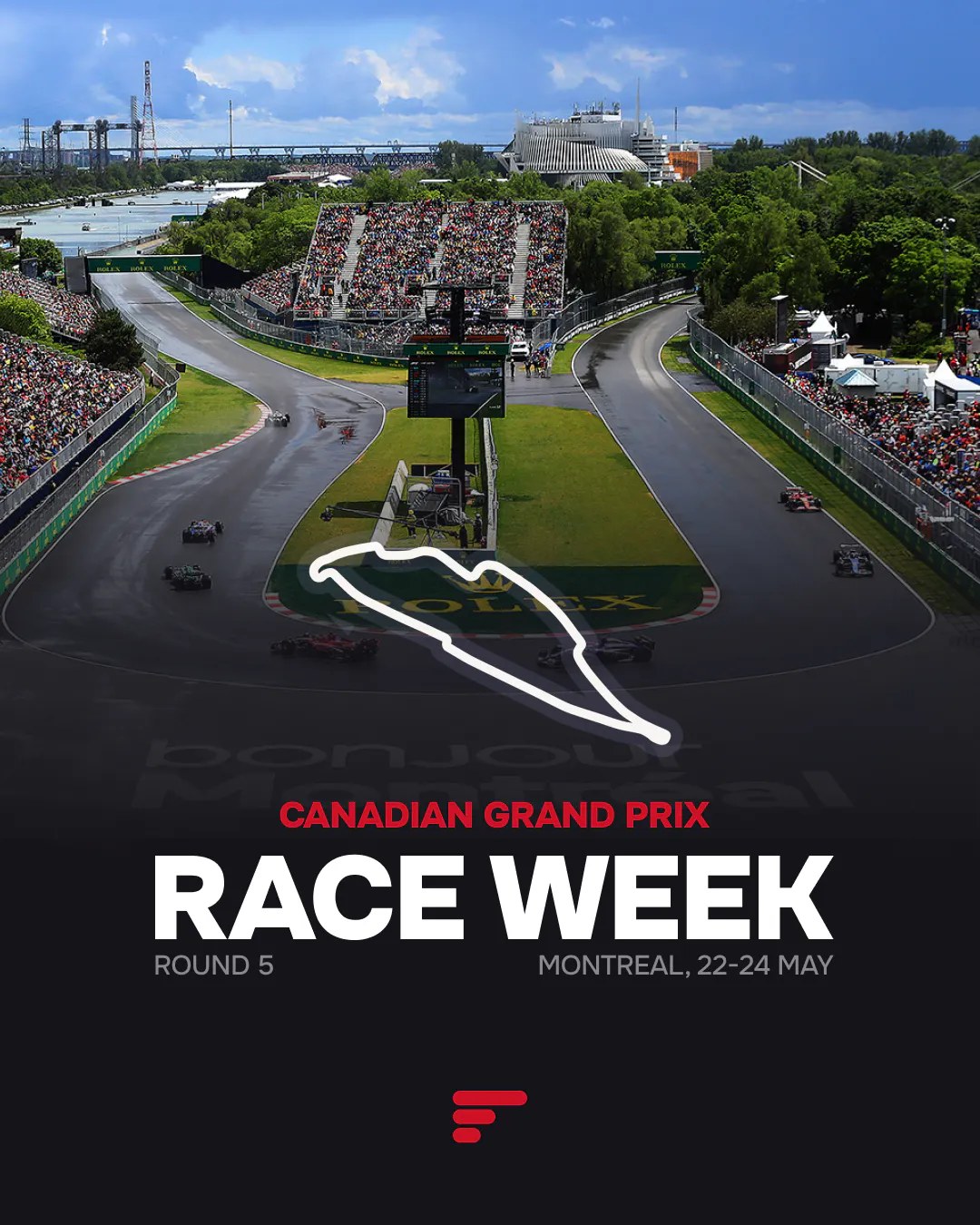
Formula 1 lands in Montreal earlier than usual this year, wrapping up a high-stakes North American double-header. The Circuit Gilles-Villeneuve hosts the second consecutive Sprint event of the 2026 season, compressing preparation time and increasing setup risk. With the championship picture shifting rapidly and crucial technical regulations reaching a tipping point, the paddock arrives in Canada with plenty of scores to settle.
Russell Targets Montreal Recovery After Antonelli’s Rise
George Russell entered 2026 with the weight of championship favoritism on his shoulders. A commanding early victory in Australia validated that status as Mercedes hit the ground running under the new regulations. Mercedes’ early advantage has narrowed rapidly over the last three rounds.
A costly reliability issue sidelined Russell during Qualifying in China, opening the door for his rookie teammate, Kimi Antonelli, to claim a historic maiden victory. Antonelli has carried the momentum since, backing up his Chinese triumph with clinical wins in Japan and Miami.
Antonelli’s Florida masterclass extended his championship lead to 20 points, exposing Russell’s ongoing struggles to find a rhythm on the Miami layout. Montreal historically suits Russell’s braking confidence and qualifying strengths.
The Circuit Gilles-Villeneuve is firmly Russell territory. Last season, he turned pole position into a dominant victory, matching his podium finish from the front row twelve months prior. If Russell wants to arrest Antonelli's momentum and reassert his title credentials, this is the weekend to do it.
McLaren and Ferrari Close the Gap to Mercedes
Mercedes may lead the standings, but Miami suggested Mercedes no longer holds a clear performance margin. Miami saw a massive influx of technical updates from McLaren, Ferrari, and Red Bull, effectively eroding the Silver Arrows' early-season performance buffer.
McLaren, in particular, looked formidable in Florida. Lando Norris spearheaded a dominant 1-2 finish in the Sprint before pushing Antonelli to the limit in the Grand Prix. With Oscar Piastri securing a double podium for the Woking squad, the papaya cars proved they are now genuine victory contenders on merit.
Canada could significantly reshape the current development hierarchy. Mercedes is scheduled to unleash a comprehensive upgrade package in Canada, aiming to reclaim clear air at the front. But McLaren isn't standing still, with team principals confirming further parts are ready for the MCL38.
Compounding the challenge, teams have had two weeks to pore over telemetry from Miami. Optimizing complex aerodynamics during a chaotic Sprint weekend is notoriously difficult; with that data now digested, the grid should unlock significantly more potential from their existing hardware.
Unpacking ADUO: The 2026 Engine Equalization Mechanism
A new acronym will dominate technical discussions in the Montreal paddock: ADUO, or Additional Development and Upgrade Opportunities.
Introduced alongside the revolutionary 2026 power unit regulations, ADUO is the FIA’s regulatory mechanism designed to prevent any single engine manufacturer from enduring a prolonged performance deficit. Crucially, this mechanism focuses strictly on the Internal Combustion Engine (ICE) parameters, rather than overall hybrid system performance.
The system operates on strict mathematical thresholds monitored by the governing body:
- The 2% to 4% Window: Any manufacturer whose ICE is calculated to be between 2% and 4% adrift of the field's benchmark power unit will receive one additional development token for the current season, and another for the following year.
- The >4% Threshold: If a manufacturer falls more than 4% behind the top-performing ICE, they are granted two additional upgrade opportunities for both the current and subsequent seasons.
What can teams change under ADUO?
According to FIA regulations, permitted development areas include specific ICE components, the exhaust architecture, turbocharger and wastegate assemblies, exhaust-mounted electrical sensors, the Energy Recovery System (ERS) and its cooling layout, the MGU-K, and the car’s core Control Electronics.
The timing of the Canadian Grand Prix is vital. As Round 5 of the 2026 world championship, Montreal marks the conclusion of the FIA’s first official engine assessment window. Following this weekend, the governing body will finalize and communicate any ADUO allocations. The subsequent monitoring windows will span from Monaco to Hungary (Rounds 6-11), and Zandvoort to Mexico City (Rounds 12-18).
Why the Canadian GP Remains One of F1’s Toughest Circuits
The Canadian Grand Prix remains an unmissable fixture for drivers and fans alike, blending an electric city atmosphere with a circuit layout that routinely produces classic encounters.
Nestled on Notre Dame Island in the middle of the St. Lawrence River, the track forces drivers to compromise between high straight-line speeds and aggressive chicane-hopping. The concrete walls are notoriously close, none more so than the infamous Wall of Champions at the exit of the final chicane. It earned its moniker in 1999 when three world champions—Michael Schumacher, Jacques Villeneuve, and Damon Hill—all ended their sessions in its unforgiving barriers.
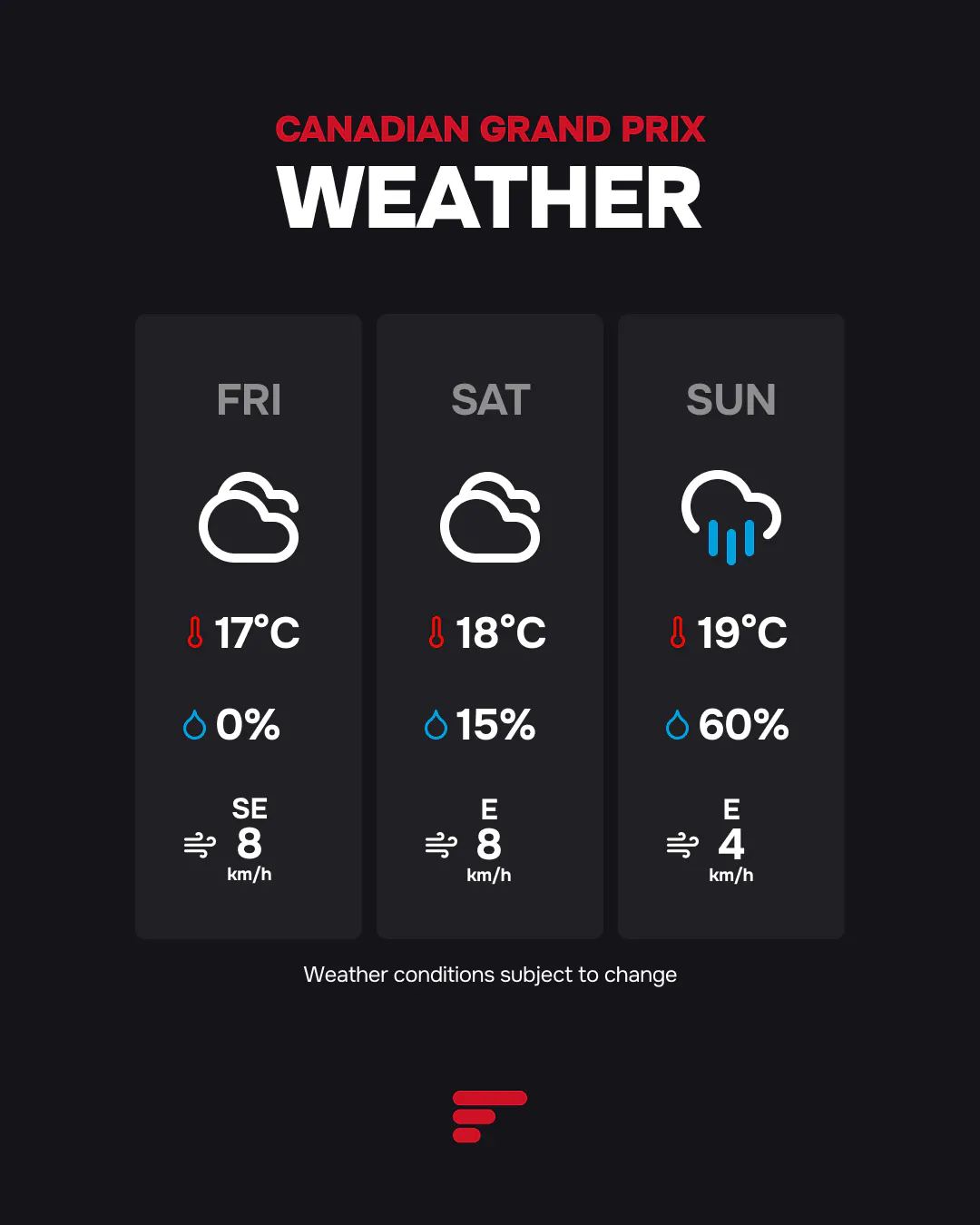
From Jenson Button’s legendary, rain-soaked last-to-first victory in 2011 to modern strategic chess matches, Montreal rewards confidence under braking and precision over kerbs and punishes the slightest lapse in concentration. With the event shifting to an earlier May date, the region's notoriously volatile spring weather could throw an extra variable into Sunday's grand prix.
Why the Sprint Format Increases Pressure in Montreal
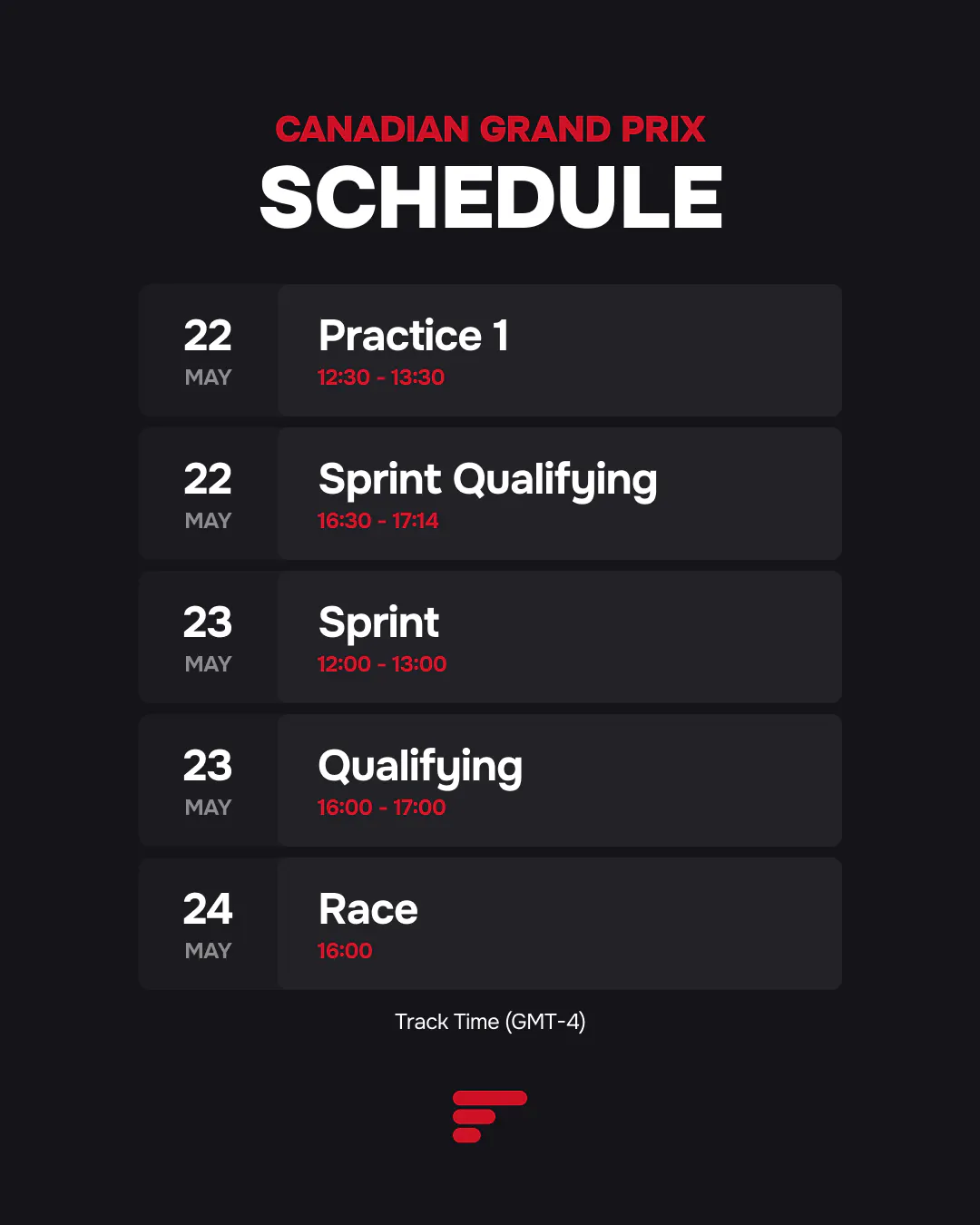
Adding to the tension, the Circuit Gilles-Villeneuve hosts a Sprint weekend for the very first time. This high-pressure format strips teams of their usual luxury of data gathering, leaving just one 60-minute practice session on Friday before competitive action begins with Sprint Qualifying.
This format severely penalizes drivers who prefer to build their confidence incrementally. At a track where maximizing lap time requires clipping high curbs and running inches from concrete exit walls, drivers must find the limit immediately.
Those who dial in their mechanical balance during the sole Friday practice session stand to reap massive rewards in the Sprint race. Conversely, teams fighting handling imbalances could find themselves trapped in a performance deficit for the remainder of the weekend.
Circuit Gilles-Villeneuve Stats
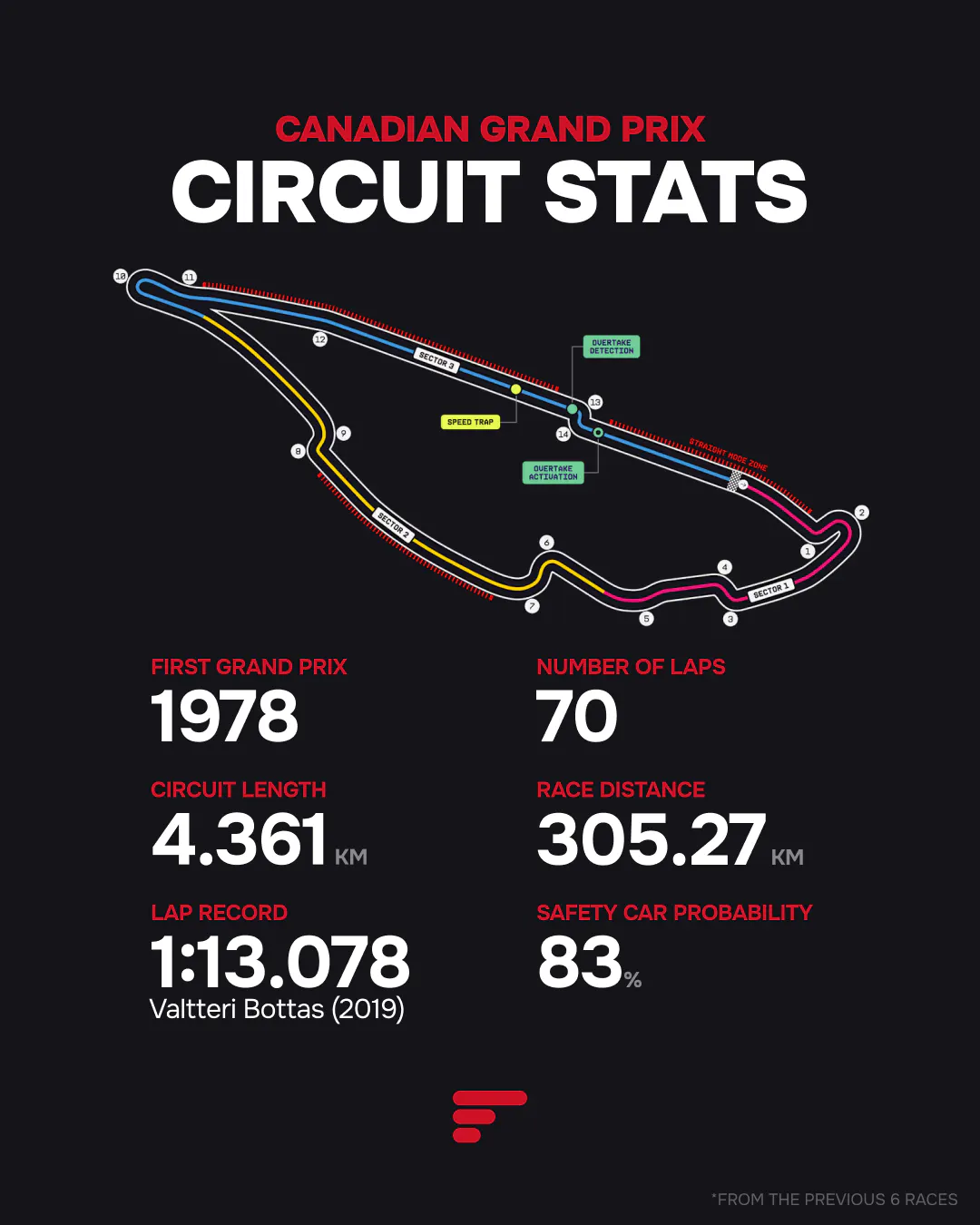
- First Grand Prix: 1978 (1967 Mosport)
- Number of Laps: 70
- Corners: 14
- Circuit Length (km): 4.361
- Race Distance (km): 305.27
- Lap Record: 1:13.078 – Valtteri Bottas (2019, Mercedes)
- Track Record: 1:10.240 – George Russell (2024, Mercedes)


- Safety Car Probability: 83%*
- Virtual Safety Car Probability: 33%*
- Pit stop time loss: 18.25 seconds (including 2.5s stationary)
- Pole run to Turn 1 braking point: 187 meters
- Most pole positions: Michael Schumacher & Lewis Hamilton (6)
- Most wins: Michael Schumacher & Lewis Hamilton (7)
- Overtakes completed in 2025: 75
- Trivia: Canada hosted the longest race in F1 history in 2011, lasting 4h 04m 39s
*From the previous six races in Canada
FAQ
Why is Montreal difficult for F1 cars?
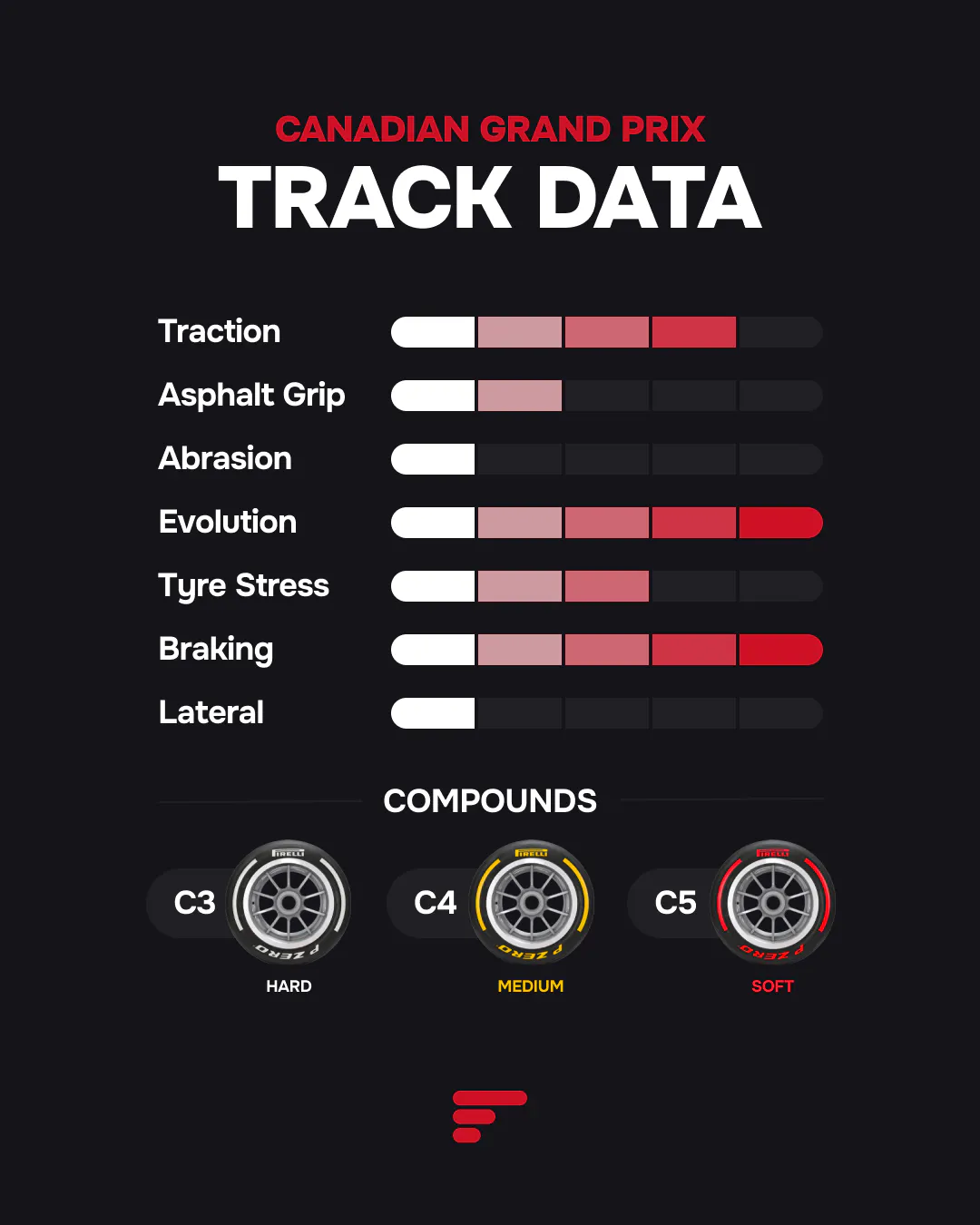
The Circuit Gilles-Villeneuve forces teams into an unusual aerodynamic and mechanical compromise. Cars need low drag for Montreal’s long straights, but also enough downforce and suspension compliance to attack aggressive chicanes and high kerbs. Heavy braking zones, traction demands, and close concrete walls further punish setup instability and driver mistakes, especially during Sprint weekends with limited practice time.
Why did the Canadian Grand Prix date change in 2026?
Formula 1 advanced the Canadian Grand Prix to late May to better regionalize the calendar. By pairing the Montreal race directly with Miami, the sport significantly reduces transatlantic freight travel and cuts down carbon emissions.
How does the F1 Sprint format affect the Canadian GP?
With only one hour of practice before competitive sessions begin, teams have minimal time to optimize ride heights and mechanical setups for Montreal's aggressive curbs. This elevates the risk of errors and unpredictable grid orders.
What is ADUO in Formula 1?
ADUO stands for Additional Development and Upgrade Opportunities. It is a performance-balancing mechanism introduced for the 2026 season that allows power unit manufacturers with a significant performance deficit (over 2% behind the benchmark ICE) to introduce extra engine upgrades.