 Formula 1 Dashboard


Formula 1’s European season begins in the most familiar and unforgiving surroundings of all.
The Monaco Grand Prix opens a demanding run of six races in eight weeks, bringing the paddock back to Monte Carlo, where championship momentum, qualifying precision and driver confidence can all shift in a single lap.
Kimi Antonelli arrives with a commanding lead in the Drivers’ Championship, while Mercedes remain unbeaten in Grands Prix this season. Yet Monaco rarely follows the usual form book. Its narrow streets, low-speed corners and brutal qualifying demands could bring Ferrari and McLaren closer to the front — and perhaps expose the first real weakness in Mercedes’ early-season dominance.
Why Monaco Still Matters So Much in Formula 1
There are faster circuits. There are better racing circuits. But there is still nothing quite like Monaco.
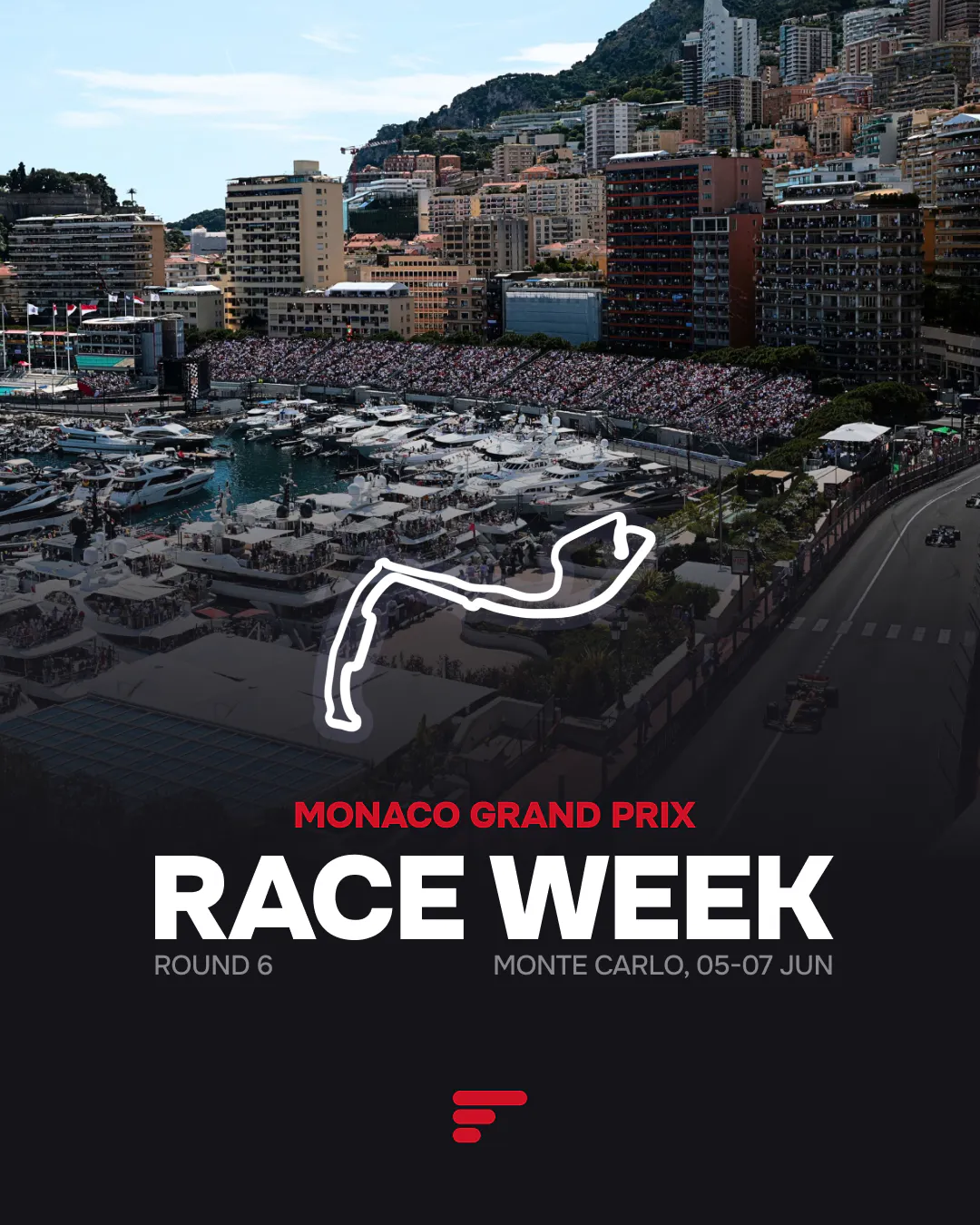
The track remains one of Formula 1’s most recognisable stages, winding through the Principality past Casino Square, Mirabeau, the tunnel, Tabac and the Swimming Pool. The harbour, the hillside and the Mediterranean backdrop all add to the spectacle, but Monaco’s appeal is not just visual. It is about consequence.
Every mistake is punished. Every centimetre matters. A driver can look untouchable for 77 seconds and still lose everything with one brush of the barrier.
That is why qualifying in Monaco carries such weight. Overtaking remains notoriously difficult, which means Saturday often shapes the entire weekend. A clean lap around Monte Carlo requires more than raw pace. It demands absolute commitment, perfect tyre preparation, confidence under braking and trust in the car through the slowest corners on the calendar.
This generation of more nimble Formula 1 machinery should only increase the challenge. With high torque, sharp traction demands and limited margin for correction, Monaco will test how comfortable drivers really are with their cars when the walls close in.
Winning here still sits high on every driver’s wish list. The question this weekend is whether Monaco will produce another familiar winner — or add a new name to one of F1’s most prestigious lists.
Can Ferrari and McLaren Challenge Mercedes in Monaco?
Mercedes have controlled the Grand Prix Sundays so far, with Antonelli’s victory in Canada extending their perfect record in full-length races. That dominance has not been completely untroubled, though. The team came under pressure in the Sprint in Canada and had already been beaten in the Sprint in Miami.
Monaco could be the most serious threat yet.
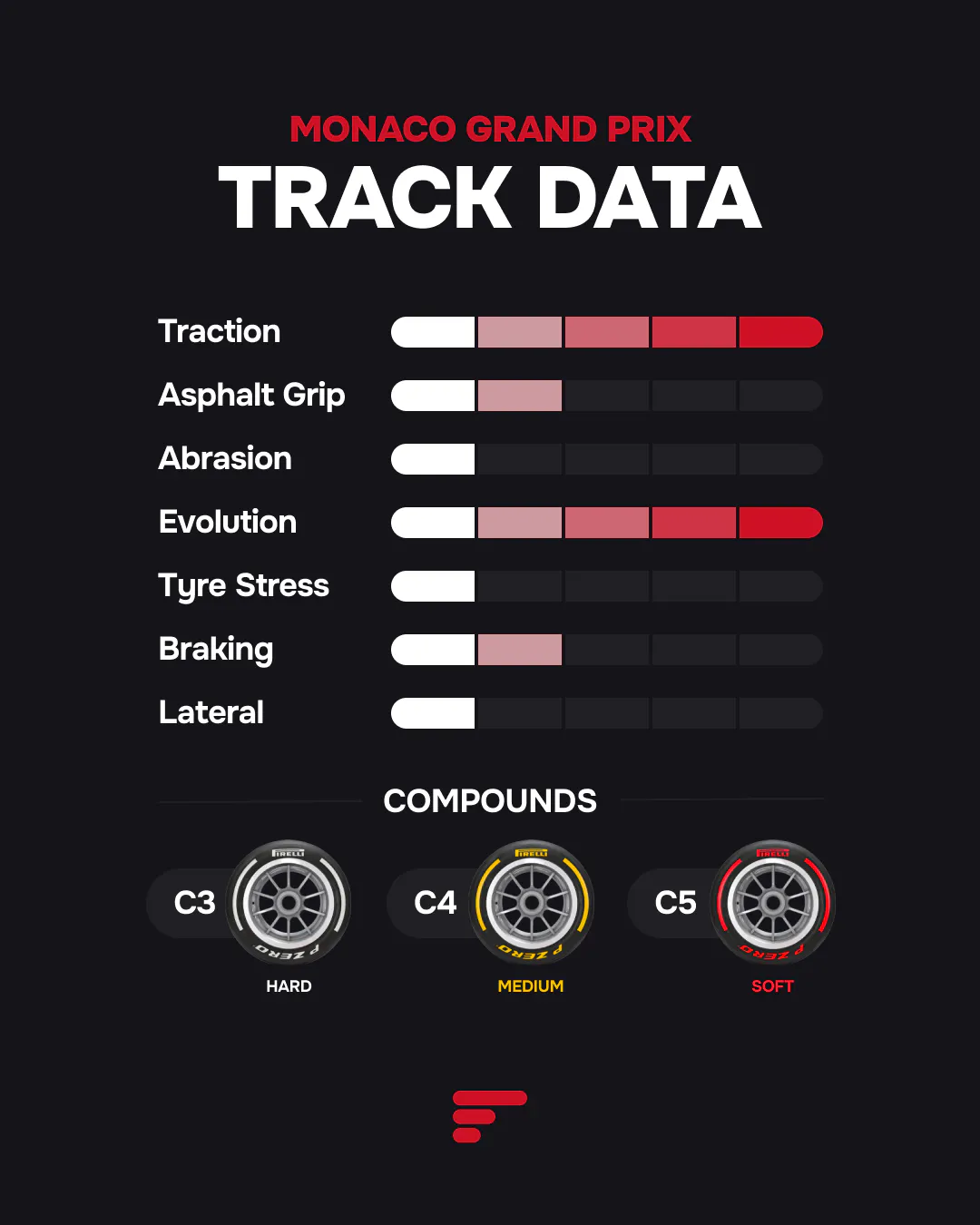
The circuit’s layout reduces the influence of outright power unit performance. There are no long full-throttle sections in the way teams find at venues such as Miami or Canada, and lap time is built mainly through low-speed traction, mechanical grip, braking stability and chassis balance.
That plays directly into Ferrari’s expected strengths.
Ferrari’s car has looked strong in corners but less convincing on the straights. At Monaco, that weakness should matter less. If the team can find the right ride height window, keep the tyres alive through qualifying and give its drivers confidence over the bumps and kerbs, Ferrari could be far more dangerous than it has been at power-sensitive circuits.
McLaren also have reason to be optimistic. The team believes its car is competitive in low-speed corners, an area that dominates the Monte Carlo layout. If McLaren can combine that with strong tyre preparation, it could join Ferrari in turning Monaco into Mercedes’ most complicated weekend of the season.
For Mercedes, the challenge is clear. Their car remains the benchmark, but Monaco is not a circuit where a broad performance advantage always translates cleanly. Track position, traffic, tyre warm-up and qualifying execution could matter more than the underlying pace that has carried them so far.
Russell Needs Monaco Response After Canadian Frustration
George Russell left Canada with proof of pace but not the result he needed.
After a disappointing Miami weekend, Russell responded exactly as Mercedes would have hoped. He beat Antonelli to pole for both the Sprint and the Grand Prix, with the same margin — 0.068s — in each qualifying session. He then converted Sprint pole into victory after a tense battle with the championship leader.
The Grand Prix looked set to follow a similar pattern. Russell and Antonelli traded pressure and positions, with Russell eventually reclaiming the lead before reliability trouble ended his race after 30 laps.
That retirement hurt.
Russell’s performance level was back where he expected it to be, but the championship picture moved against him. He now trails Antonelli by 43 points, a gap that is far from decisive this early in the season but already large enough to demand a response. For a deeper look at their season-long comparison, see our George Russell vs Kimi Antonelli head-to-head.
Monaco gives him an immediate opportunity.
The circuit rewards precision and confidence, two qualities Russell has often shown in qualifying. If he can put together another front-row performance — and this time convert it into a Sunday result — he can begin to slow Antonelli’s momentum.
The complication is that Mercedes may not have the fight to themselves. If Ferrari and McLaren are genuinely in range, Russell’s task becomes more than simply beating his teammate. He may need to fight through a three-team contest on a circuit where one poor qualifying lap can define the entire weekend.
F1 Driver Market Rumours Begin to Build
Only five rounds into the season, Formula 1’s driver market is already moving into focus.
That may feel early, but June is often when conversations become more serious. Teams begin assessing performance trends, drivers look for leverage, and contract options start to matter more than public statements.
Haas team principal Ayao Komatsu was direct in Canada when addressing speculation around Esteban Ocon’s seat after Miami. He insisted Haas would keep its line-up of Ocon and Ollie Bearman until the end of the season, while also acknowledging that this is the period when teams begin shaping future driver plans.
Oscar Piastri has also dismissed links to Red Bull in the event of Max Verstappen leaving, pointing instead to his McLaren contract. Even so, the fact such speculation is already circulating says plenty about how active the 2027 driver market could become.
Several drivers have expiring deals or contract options that may open the door to movement. With the European season now intensifying, performance swings will carry extra political weight. A strong run of races can secure a seat. A poor one can quickly change the tone of negotiations.
Monaco may be a race where overtaking is limited, but in the paddock, the positioning has already begun.
Monaco Qualifying Traffic Could Be Worse Than Ever
Traffic is always one of Monaco’s defining problems. This year, it could be even more complicated.
With Cadillac now on the grid, 22 cars are set to share the circuit during qualifying. That makes Q1 especially difficult, as drivers search for clear air on one of the shortest and narrowest tracks of the season.
For race engineers and strategists, finding space will be almost as important as tyre preparation. Send a car too early and the track may still be evolving. Send it too late and the driver risks running into traffic, yellow flags or a compromised final sector.
The challenge is not only about avoiding a slow car. It is also about not impeding anyone else. Monaco’s layout offers very few places to move aside cleanly, and the closing speeds between cars on preparation laps and push laps can create frustration almost instantly.
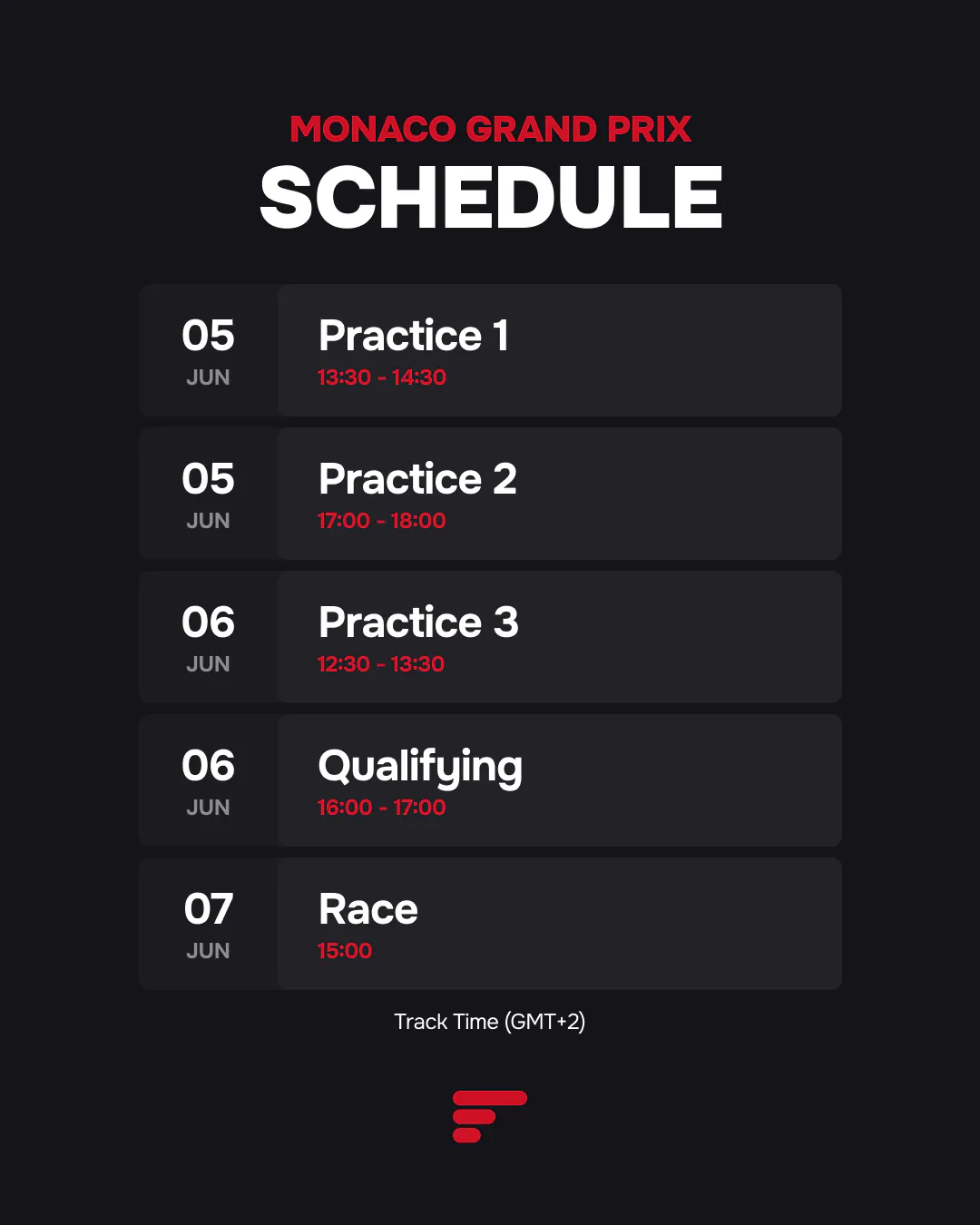
Practice sessions may also be messy. Teams will run different fuel loads, tyre programmes and setup tests, meaning cars will be circulating at very different speeds. Unlike qualifying, there is no strict obligation in practice to abandon a lap for a faster car behind, which often leads to tense radio messages and near misses.
Expect traffic to become one of the major talking points of the weekend. In Monaco, even the best car can be neutralised by bad timing.
The Key Storylines Ahead of the Monaco Grand Prix
Monaco arrives at a fascinating point in the season.
Antonelli leads the championship. Mercedes remain unbeaten in Grands Prix. Russell needs to recover lost ground. Ferrari and McLaren have reasons to believe the circuit will suit them. The driver market is beginning to stir. And with 22 cars on track, qualifying could become more chaotic than ever.
That is what makes Monte Carlo so dangerous for the form book.
Mercedes may still be the team to beat, but Monaco has a way of compressing the field and magnifying weaknesses. One missed braking point, one mistimed out-lap, one badly placed car in the final sector — any of them can decide the weekend before the race has even begun.
For a championship that has so far been shaped by Mercedes control and Antonelli’s early authority, Monaco could be the first true disruption. For a deeper view of his season so far, see our Kimi Antonelli driver stats.
Circuit de Monaco Stats
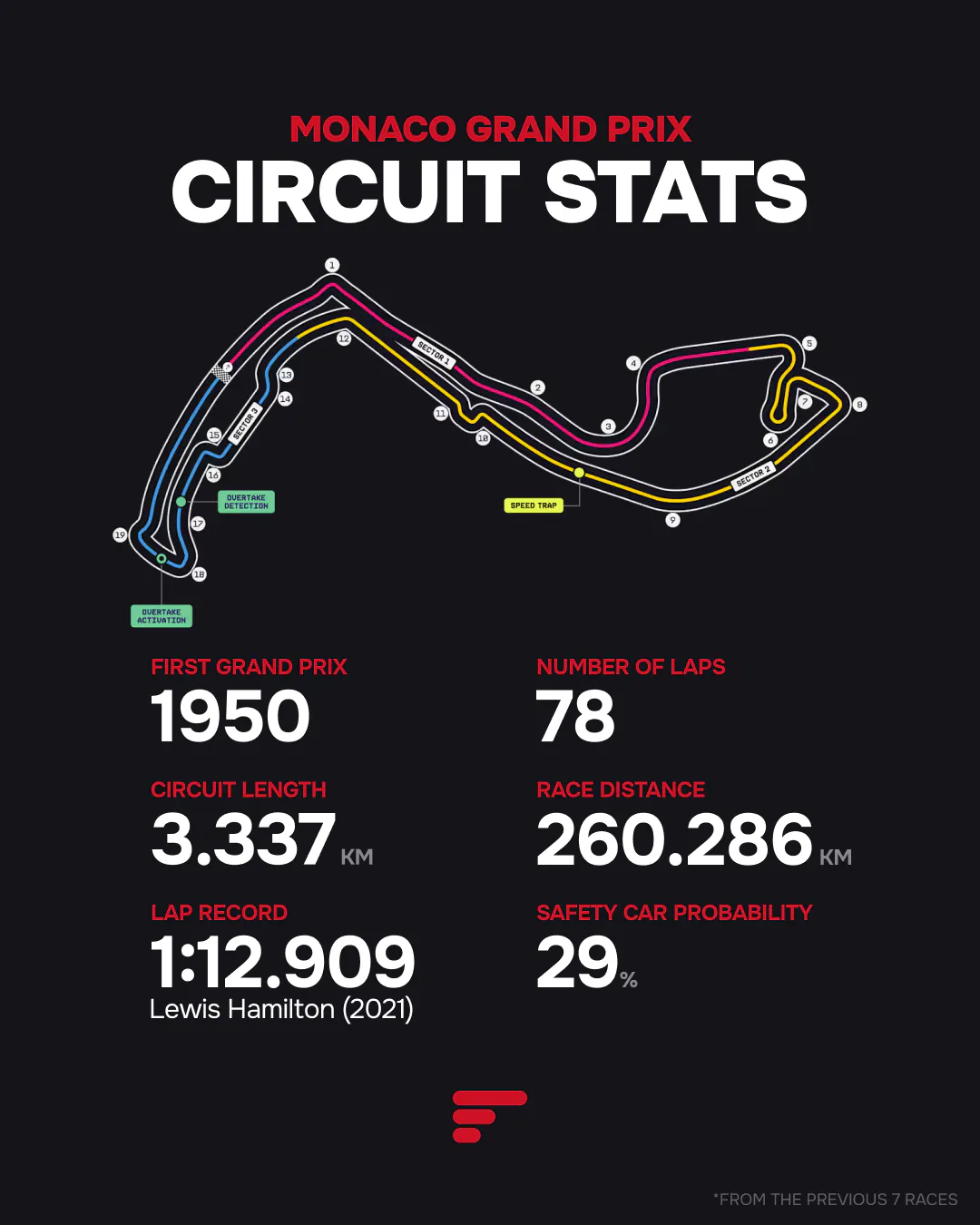
- First Grand Prix: 1950
- Number of Laps: 78
- Corners: 19
- Circuit Length (km): 3.337
- Race Distance (km): 260.286
- Lap Record: 1:12.909 – Lewis Hamilton (2021, Mercedes)
- Track Record: 1:09.954 - Lando Norris (2025, McLaren)


- Safety Car Probability: 29%*
- Virtual Safety Car Probability: 43%*
- Pit stop time loss: 19.92 seconds (including 2.5s stationary)
- Pole run to Turn 1 braking point: 142 meters
- Most pole positions: Ayrton Senna (5)
- Most wins: Ayrton Senna (6)
- Overtakes completed in 2025: 4
- Trivia: Monaco was one of seven venues on the inaugural F1 World Championship calendar back in 1950
*From the previous seven races in Monaco
FAQ
Why is qualifying so important at the Monaco Grand Prix?
Qualifying is crucial in Monaco because overtaking is extremely difficult on the narrow street circuit. Track position often defines the race, making Saturday one of the most important sessions of the Formula 1 season.
Why could Ferrari be stronger in Monaco?
Ferrari could be more competitive in Monaco because the circuit places less emphasis on straight-line speed and more on chassis performance, low-speed balance, traction and driver confidence.
Can McLaren fight for victory in Monaco?
McLaren could be a serious contender if its low-speed corner performance translates well to Monte Carlo. The team’s competitiveness will depend heavily on qualifying execution and tyre preparation.
Why is Mercedes under pressure at Monaco?
Mercedes have dominated Grand Prix Sundays so far, but Monaco’s unique layout may reduce their power unit advantage and bring Ferrari and McLaren closer. Traffic and qualifying execution could also make the weekend less predictable.
How does the 22-car grid affect Monaco qualifying?
With Cadillac joining the grid, 22 cars will be on track during Q1. That increases the risk of traffic, compromised laps and impeding incidents on one of the shortest and tightest circuits in Formula 1.
What does George Russell need from the Monaco Grand Prix?
Russell needs a strong result to begin reducing his 43-point deficit to Kimi Antonelli in the Drivers’ Championship. After showing strong pace in Canada, Monaco gives him a chance to rebuild momentum.