 Formula 1 Dashboard


Red Bull Racing has arrived at the Marina Bay Street Circuit focused on conquering a rare winless track for Max Verstappen, while other top teams have taken different approaches to the high-downforce challenge.
Red Bull Racing: Targeted Aero and Cooling
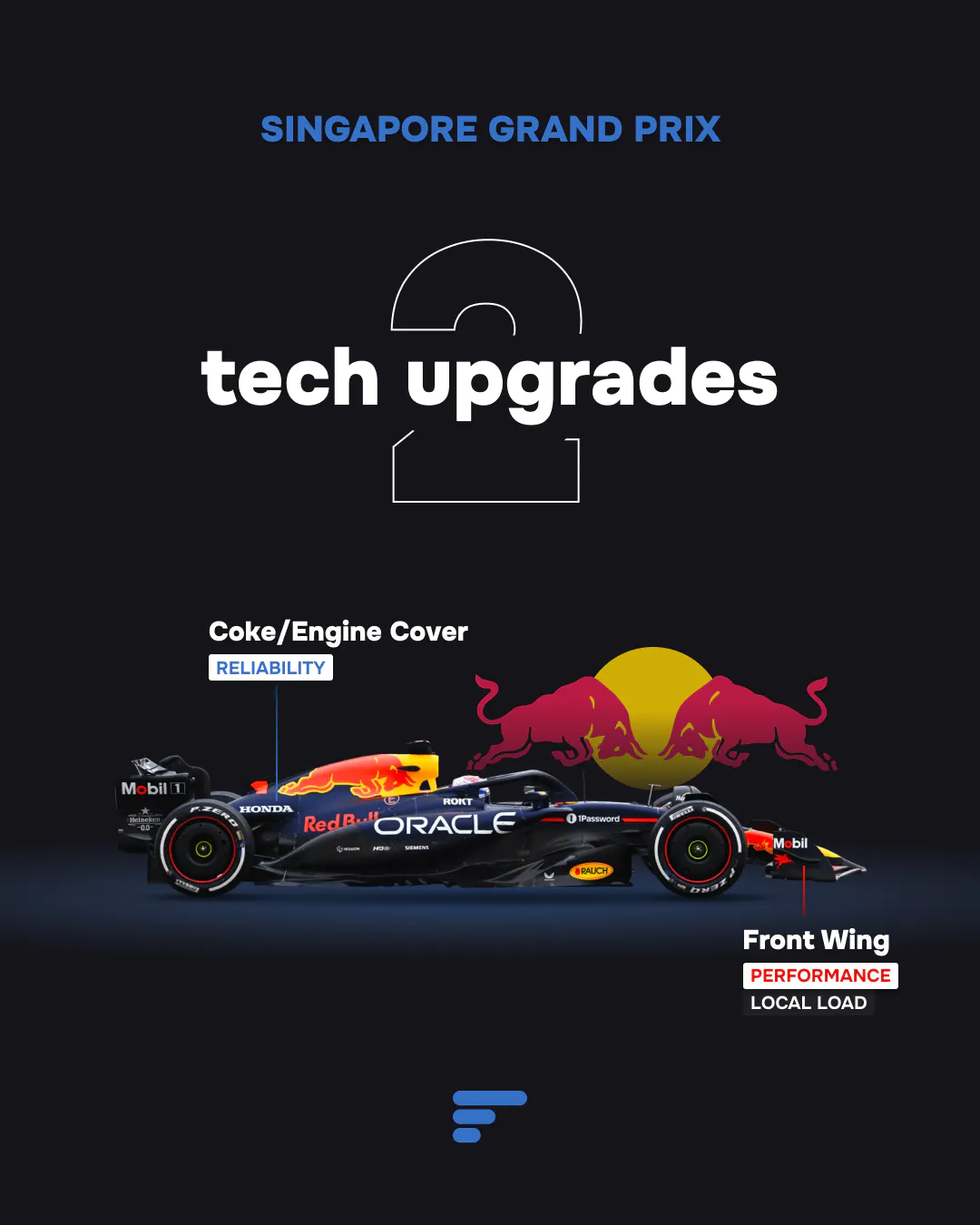
Red Bull is making a final push for performance in the RB21's current development cycle with two key upgrades aimed squarely at the high-downforce demands and intense heat of Singapore. The team's recent back-to-back victories at the low-downforce tracks of Monza and Baku were supported by a new floor, but the street circuit requires a different setup entirely.
- New Front Wing Geometry: The team has introduced an evolution of the front wing with 'locally increased cambers'. This technical refinement is designed to 'extract more load' (downforce) for improved cornering grip and reduce the car's traditional weakness on high-downforce circuits, while crucially 'maintaining flow stability'. Red Bull is hoping this will finally allow Verstappen to achieve his first victory at the venue.
- Engine Cover Update: To manage the extreme heat and humidity, a revised engine cover features an 'enlarged exit' from the top body. This provides a more efficient way to increase overall cooling capacity compared to adding cooling louvres.
Mercedes-AMG PETRONAS F1 Team: Optimizing Balance
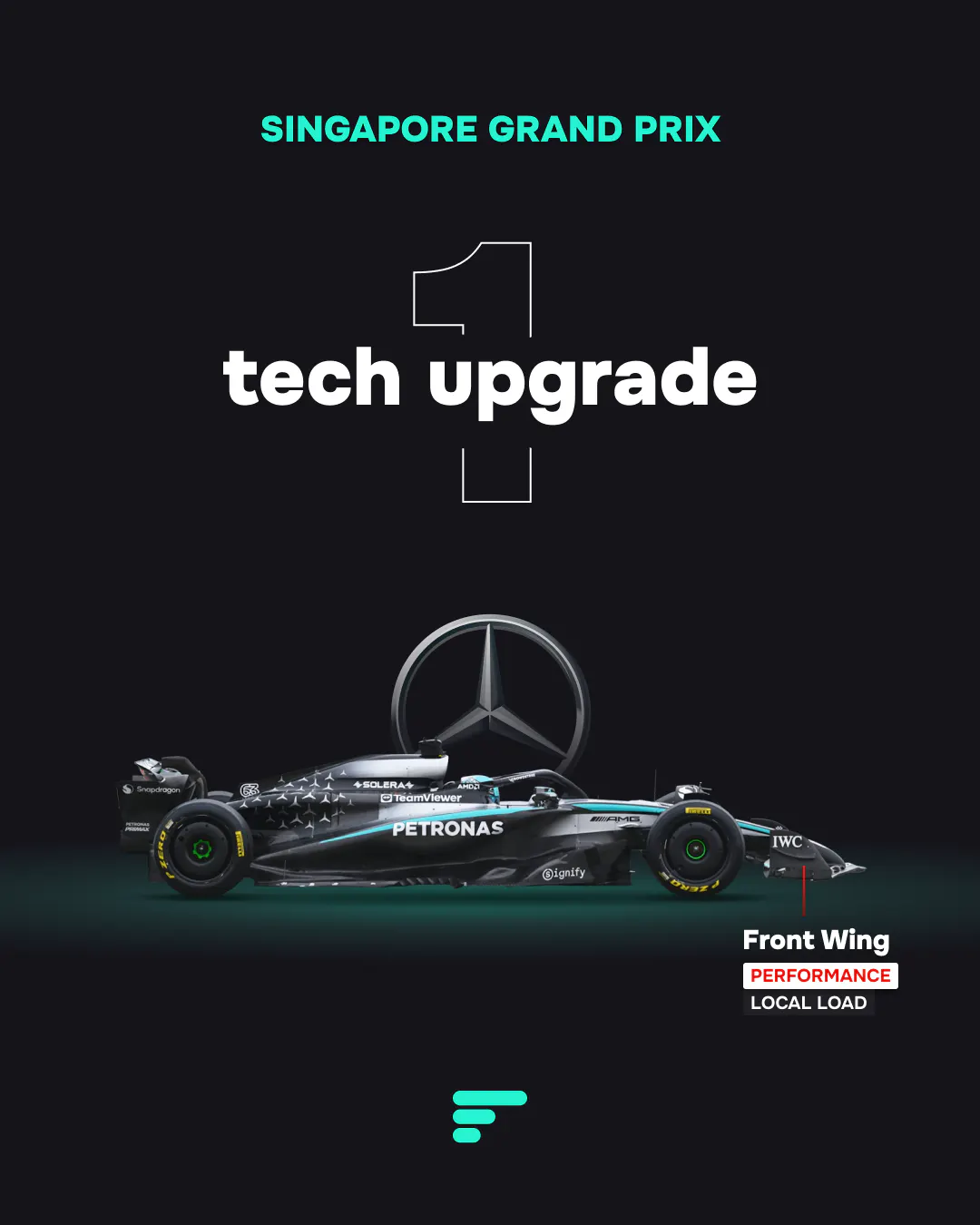
Mercedes also brought a specific adjustment to their W16 chassis to better suit the unique characteristics of the Marina Bay track.
- Reprofiled Front-Wing Flap: The team has reprofiled a section of the front-wing flap. This is a subtle adjustment designed to 'drop the local load' on that area, which helps the team achieve the appropriate car balance needed for Singapore's mix of tight corners.
Remaining Teams: Stability in Singapore
In contrast to Red Bull and Mercedes, the majority of the field opted not to introduce any new declared aerodynamic or mechanical elements for the Singapore Grand Prix. This includes key contenders McLaren and Ferrari, alongside Aston Martin, Alpine, Haas, Racing Bulls, Williams, and Kick Sauber. These teams are relying on their existing high-downforce car specifications and circuit-specific setups to perform, viewing the intense race as a test of their current performance baselines.