 Formula 1 Dashboard


The unique demands of the Circuit de Monaco, characterized by its tight corners and absence of high-speed straights, consistently compel Formula 1 teams to implement circuit-specific technical modifications. For the 2025 Monaco Grand Prix, a significant number of constructors have introduced targeted upgrades aimed at maximizing downforce, enhancing steering lock, and optimizing brake cooling for the challenging street circuit.
McLaren
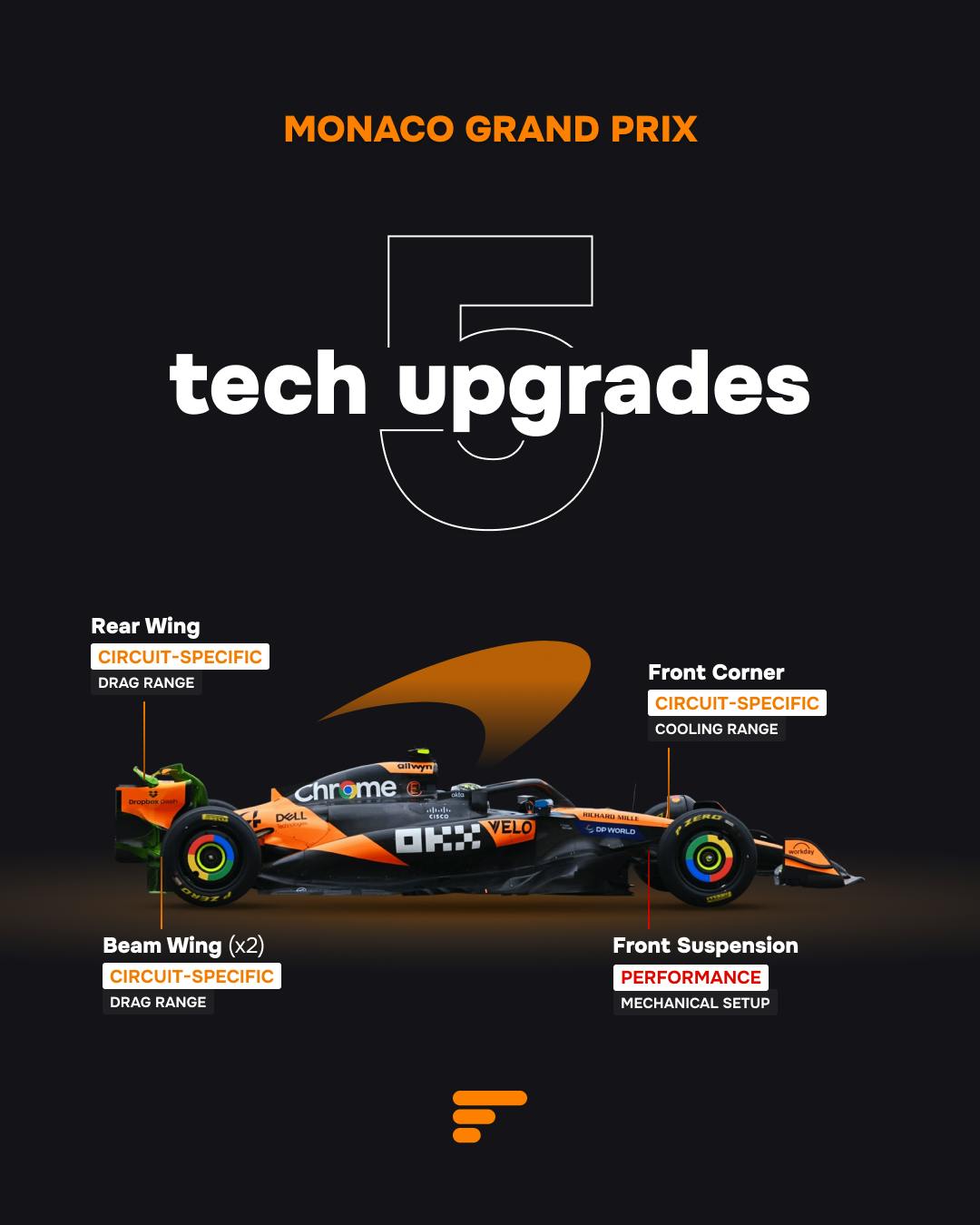
McLaren arrives in Monaco with a refined aerodynamic package, featuring a newly developed rear wing that strikes a balance between their traditional medium and high-downforce configurations. This design aims to offer efficient drag reduction while maintaining crucial downforce. Complementing this, two distinct beam wing versions have been introduced. On the mechanical front, McLaren has adjusted its front suspension geometry to facilitate the increased steering lock necessary for Monaco's hairpin turns, alongside enlarged front brake ducts to manage thermal loads effectively.
Ferrari
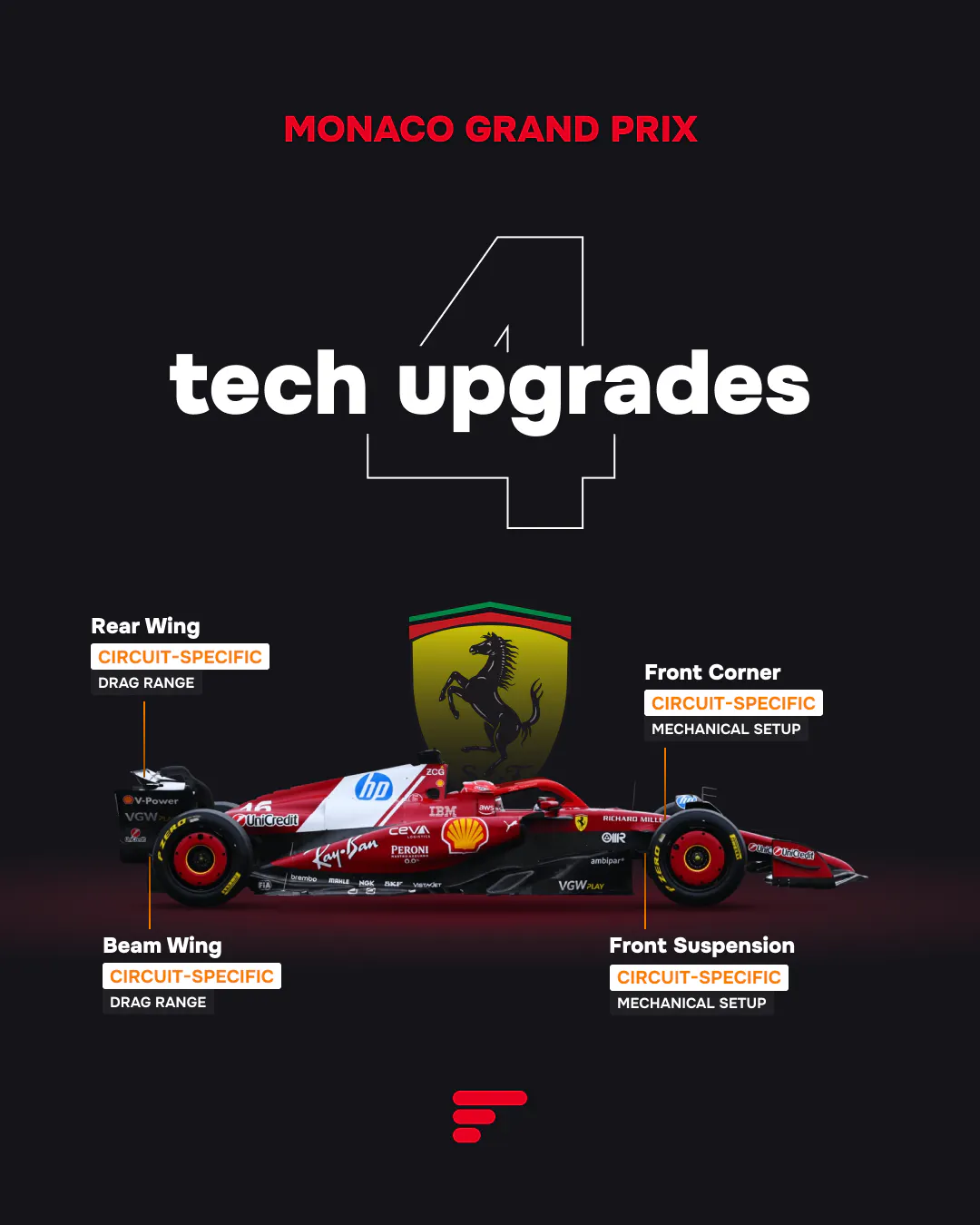
Scuderia Ferrari has also focused on critical areas for the Monaco circuit. Their front suspension has undergone modifications, similar to McLaren, to accommodate the extreme steering angles required. Front brake duct adjustments have also been made, primarily for wheel clearance given the severe steering demand. Furthermore, Ferrari has opted for a circuit-specific higher downforce rear wing and beam wing option, a design carried over from the 2024 season, indicating its proven efficacy on similar low-speed layouts.
Red Bull Racing
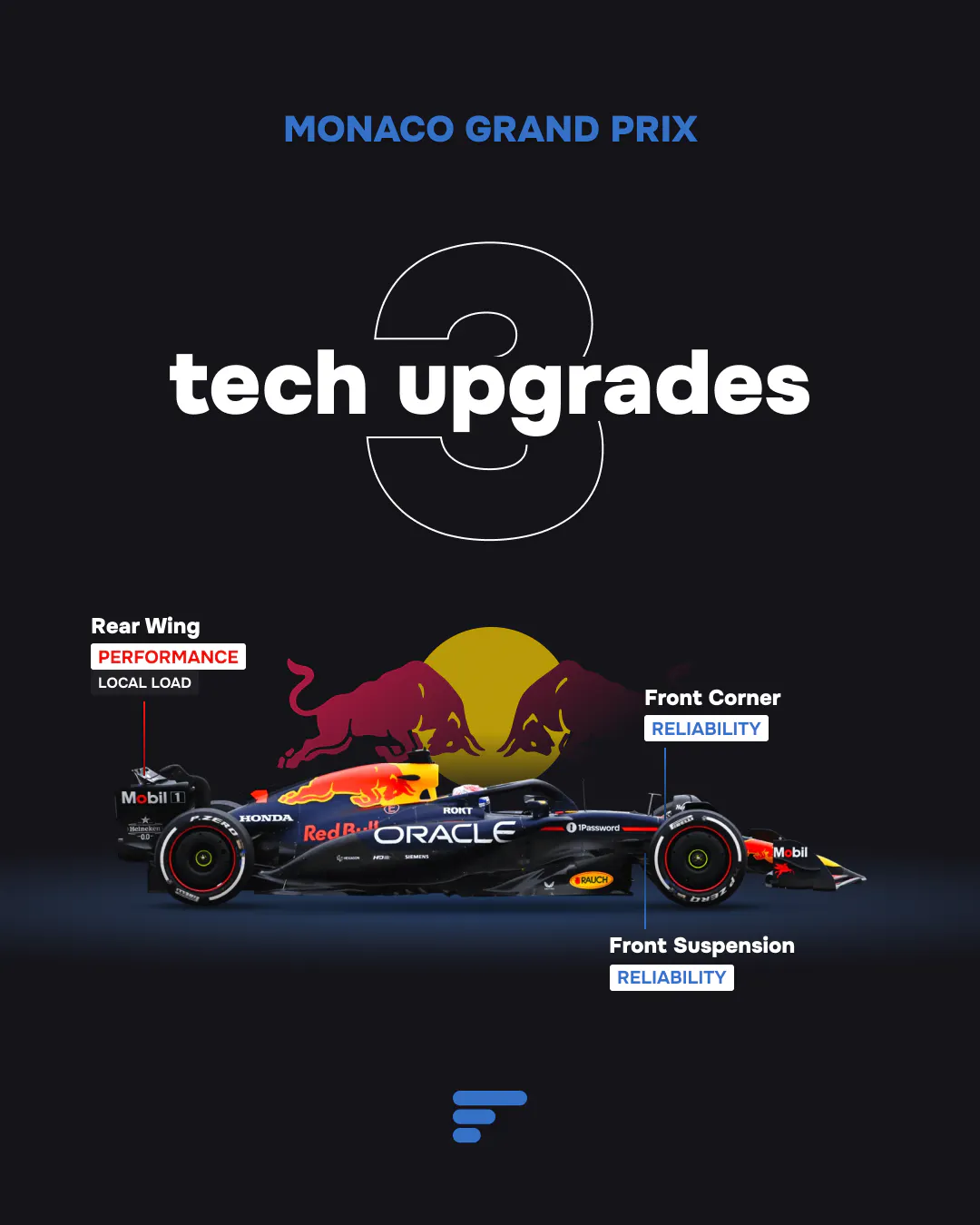
Red Bull Racing has brought a higher downforce rear wing to Monte Carlo, alongside front suspension and front brake duct modifications. These changes are designed to enhance steering lock and improve cooling efficiency, respectively. The emphasis is on maximizing rearward aerodynamic load for improved grip at the lower speeds prevalent in Monaco.
Aston Martin
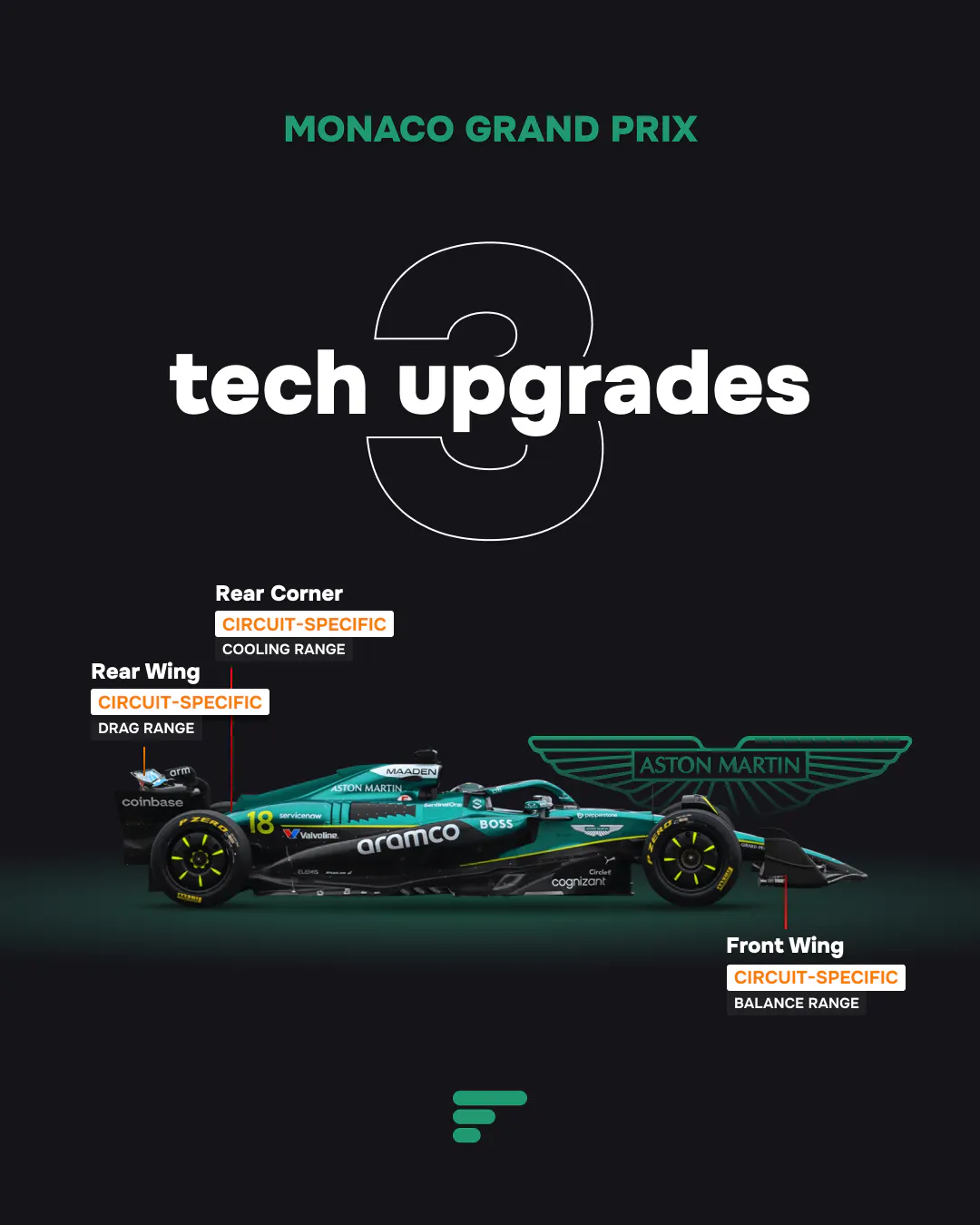
Aston Martin has taken a comprehensive approach to their Monaco upgrades. Beyond a revised rear wing, the team has introduced a different front wing element, intended to achieve aerodynamic balance throughout the car. Additionally, increased cooling capacity has been implemented for the rear brakes, acknowledging the sustained braking demands of the circuit.
Alpine
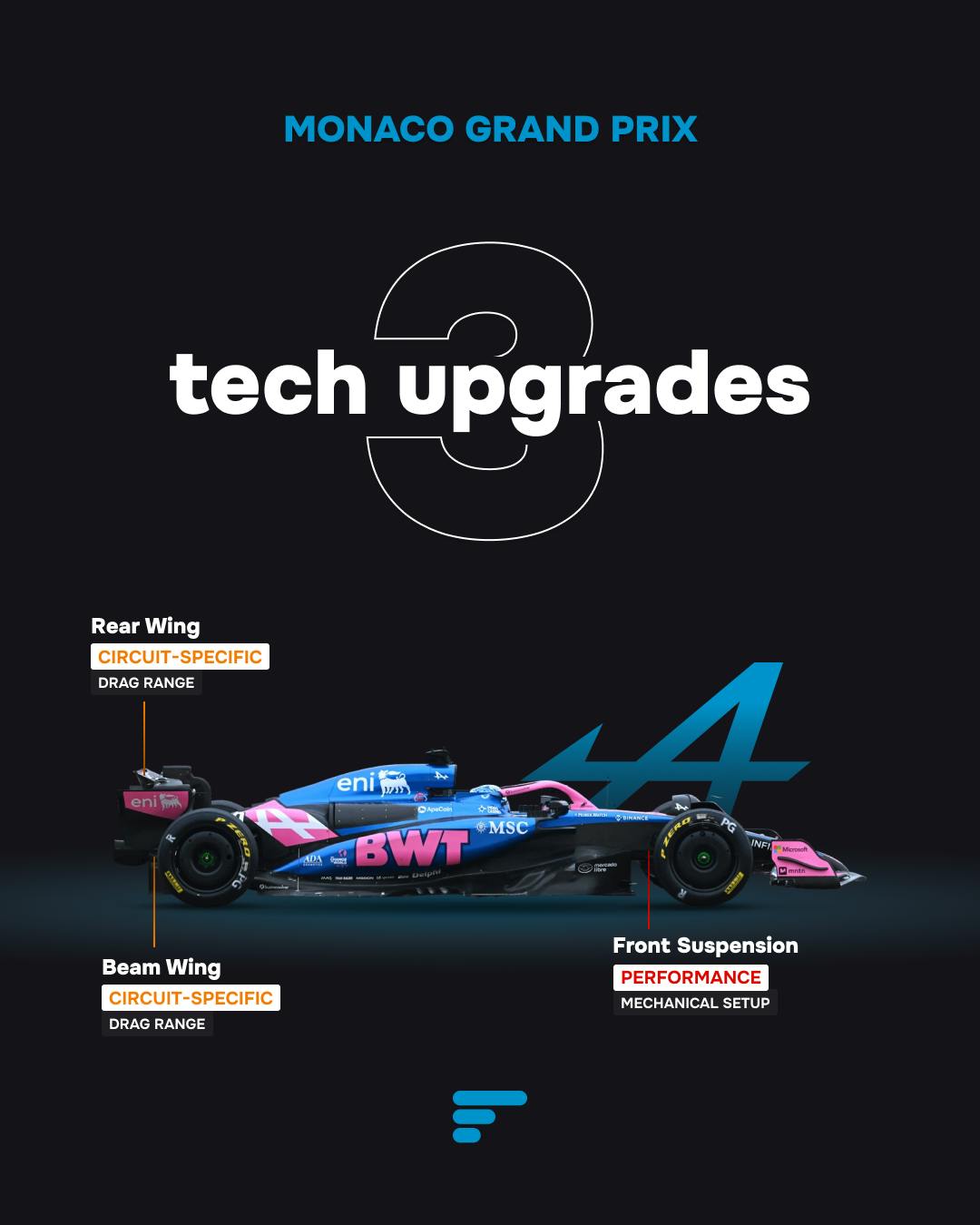
Alpine's technical updates for Monaco include developments to their front suspension, featuring revised trackrod fairings and supports tailored to the circuit's layout. The team has also adopted a more loaded rear wing and beam wing combination to boost overall downforce and mechanical grip in the low-speed sections.
Haas
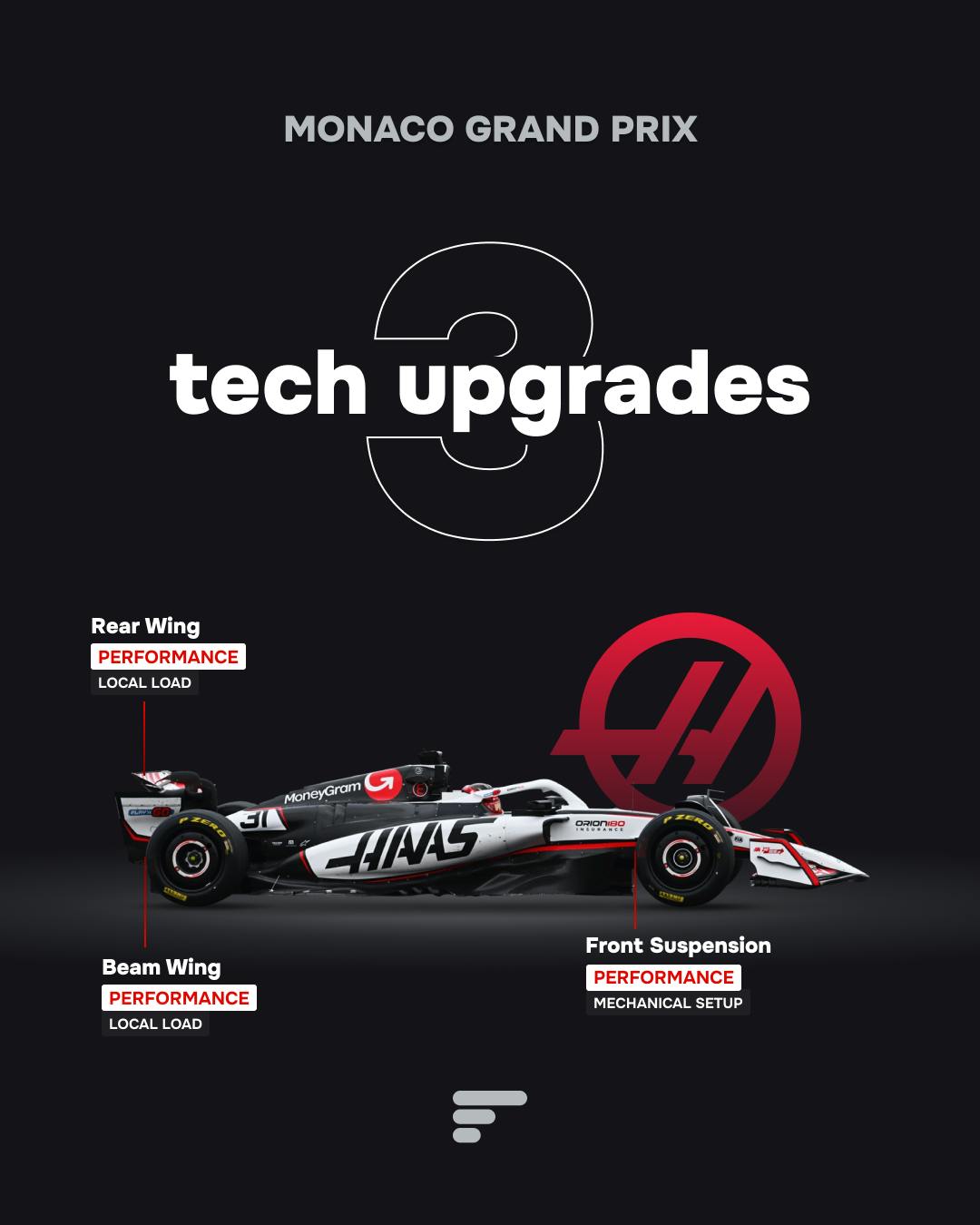
The Haas F1 Team has implemented similar modifications to Alpine, focusing on their front suspension, rear wing, and beam wing components. These changes aim to enhance localized aerodynamic load and optimize the mechanical setup for the unique characteristics of the Monaco street circuit.
Visa Cash App RB
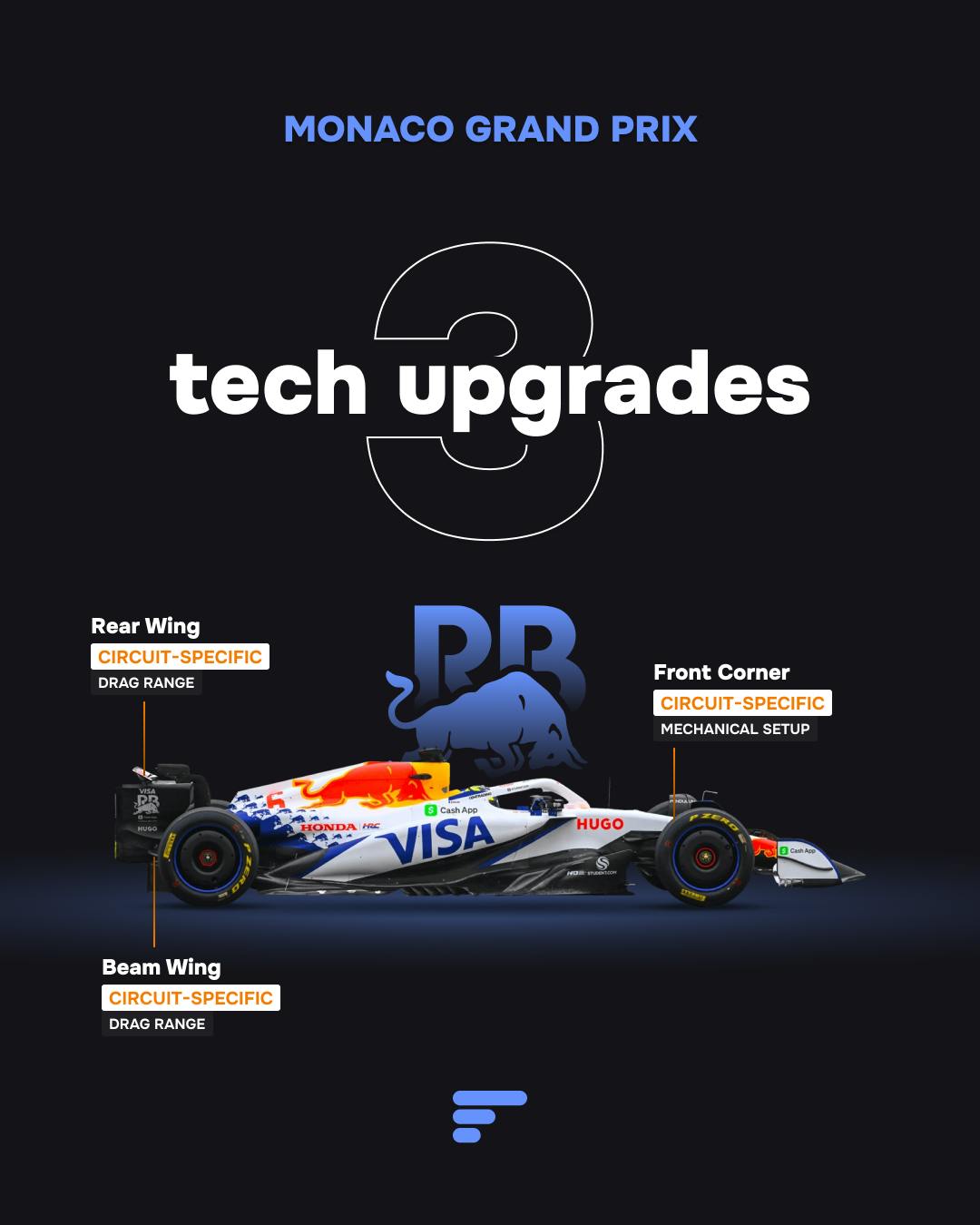
Racing Bulls has brought updates to their front corner, beam wing, and rear wing for the Monaco Grand Prix. These circuit-specific enhancements are geared towards optimizing aerodynamic load and cooling performance, crucial for the demanding slow-speed corners.
Williams
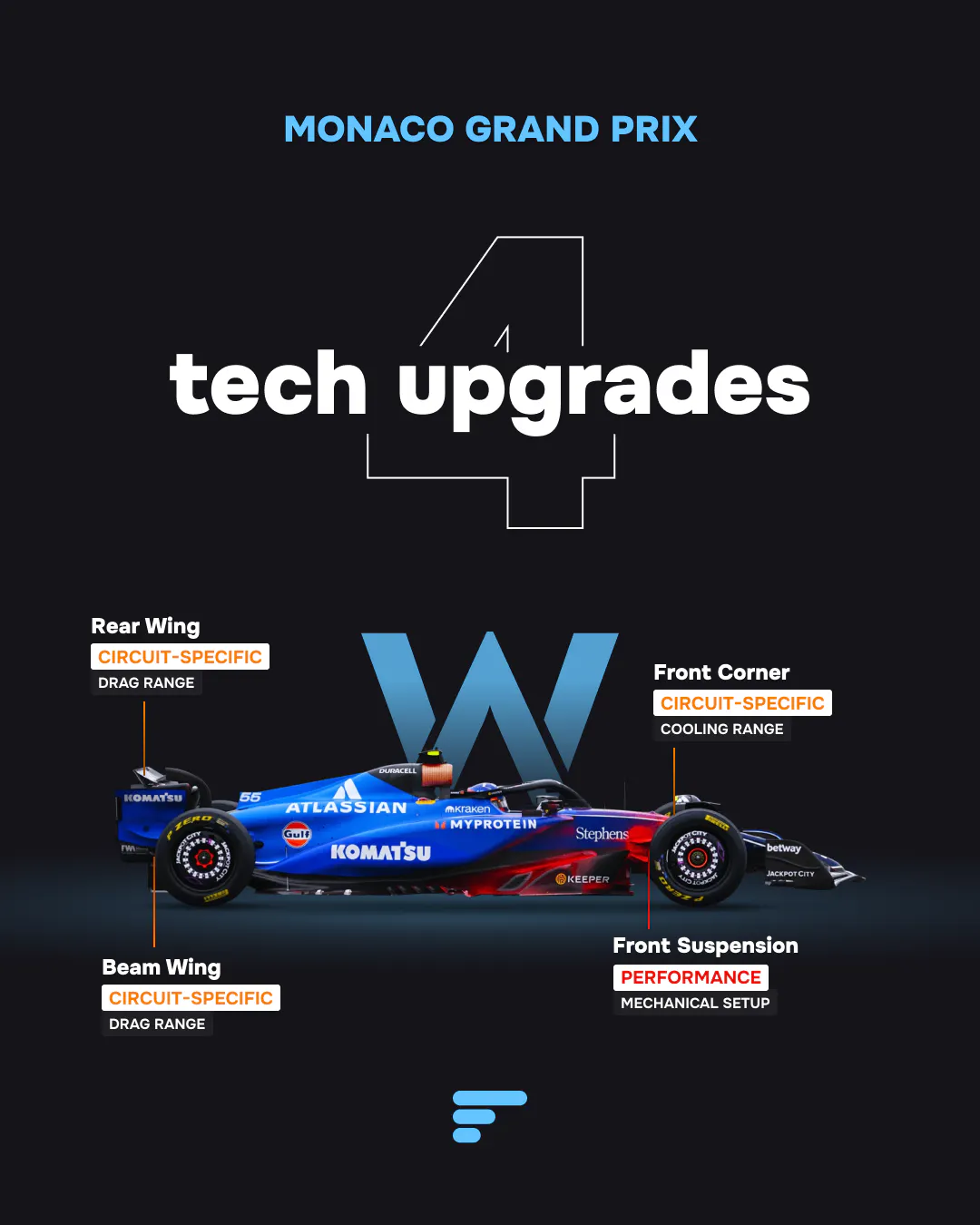
Williams Racing has also introduced changes to their rear wing, beam wing, front suspension, and front corner components. The team has clarified that their wing modifications are based on parts previously used in the 2024 season, signifying a pragmatic approach to optimizing existing, proven designs for Monaco's unique environment.
Kick Sauber
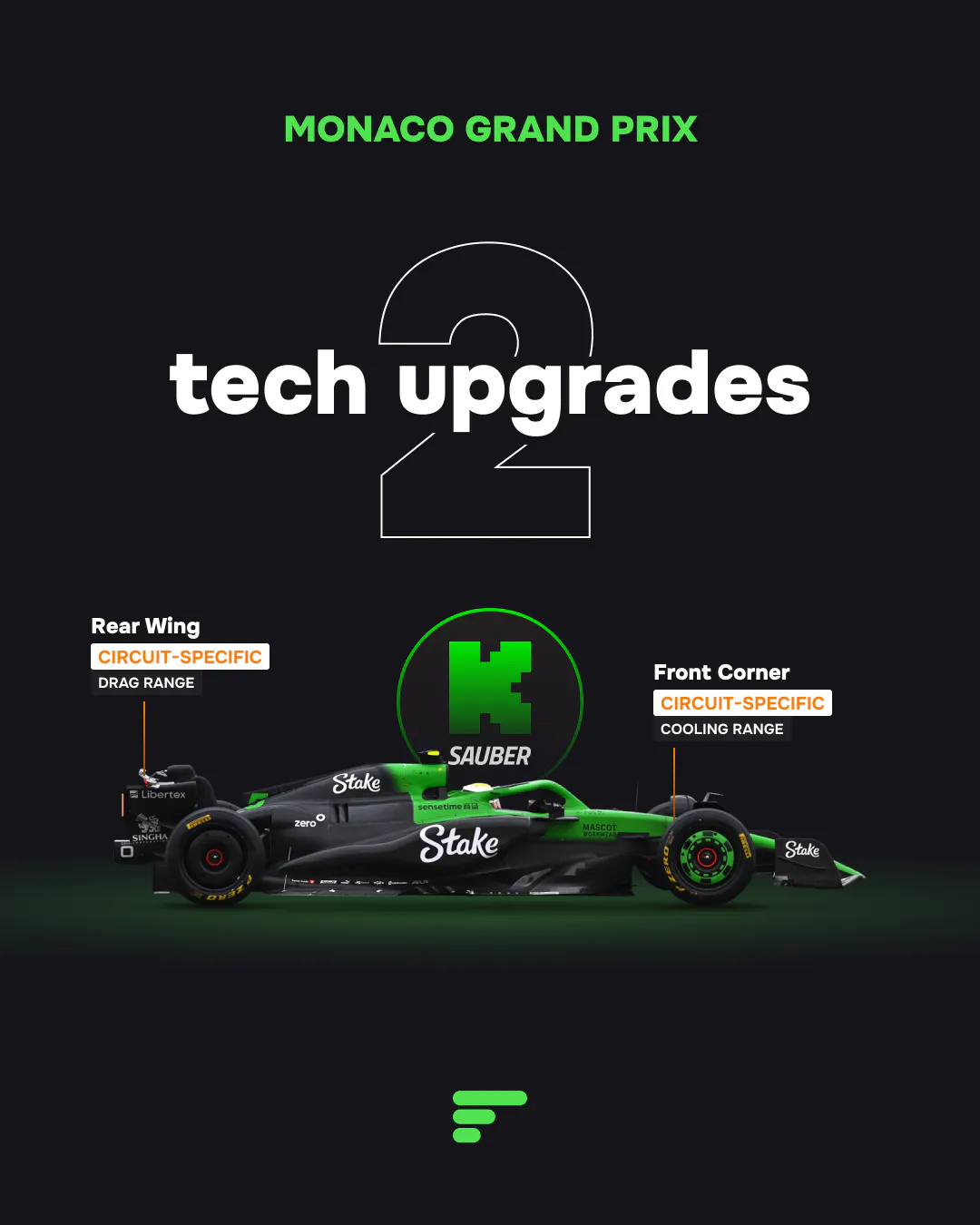
Sauber's technical adjustments for the Monaco Grand Prix are concentrated on their front brake ducts and rear wing. The team has highlighted that their revised rear wing efficiently increases downforce and is a versatile update suitable for other high-downforce venues on the calendar.
Mercedes
Notably, Mercedes is the sole team to have not introduced any newly declared components for the 2025 Monaco Grand Prix weekend. While no new parts have been submitted, it is plausible that the team may be utilizing previously employed, high-downforce specific configurations from their existing arsenal to adapt to the circuit's demands.