Formula 1 Dashboard


The 2026 Formula 1 season marks one of the most significant turning points in the sport's history. As the paddock converges on Melbourne just 91 days after the 2025 finale in Abu Dhabi, the narrative is no longer just about driver rivalries, but about a complete overhaul of technical and sporting regulations. With new power units and reimagined aerodynamics, the Australian Grand Prix serves as the ultimate litmus test for the grid's 11 teams.
The Front-Running Pecking Order and Home Heroes
While pre-season testing in Bahrain and the shakedown in Barcelona offered glimpses of performance, the true hierarchy remains speculative. McLaren, Mercedes, Red Bull, and Ferrari have all shown competitive pace, with each team suggesting their rivals may hold a slight edge.
Mercedes entered the year as a frequent favorite in paddock discussions, yet Ferrari topped the timing sheets in Bahrain. Meanwhile, Red Bull’s transition to its own power unit has shown promising initial results. For McLaren, the stakes are high as Lando Norris begins his title defense. His teammate, Oscar Piastri, faces the pressure of the "home curse"; he aims to become the first Australian to secure a classified podium at the Melbourne circuit since it joined the World Championship calendar in 1985.
Expanded Grid: Audi, Cadillac, and New Driver Dynamics
The 2026 season sees the grid expand to 22 cars with the high-profile entry of Cadillac. The American outfit has opted for veteran stability to navigate their debut, bringing Valtteri Bottas and Sergio Perez back to the cockpit after a year away from racing.
Concurrently, the Audi era begins in earnest as the German manufacturer completes its takeover of Sauber. While Audi’s proprietary power unit showed reliability in testing, they face stiff competition in a dense midfield featuring Williams, Haas, and a Mercedes-powered Alpine. The driver market also sees fresh blood in 18-year-old Arvid Lindblad. As the sole rookie of the 2026 class, Lindblad faces the dual challenge of debuting in F1 while every other driver on the grid is also recalibrating to the new machinery.
Technical Challenges: Aston Martin and New Racing Modes
While most teams enjoyed a relatively smooth transition, Aston Martin faced a more turbulent pre-season. Now a full works team in partnership with Honda, the squad is integrating massive infrastructure changes, including a new wind tunnel and the leadership of Adrian Newey. However, Newey has cautioned that the team is currently "playing catch-up." Reliability issues, specifically a battery-related fault identified by Honda during the second test, limited their mileage, leaving questions about their standing heading into the first race.
Beyond individual team performance, the fundamental nature of racing has changed:
- Overtake Mode: The traditional Drag Reduction System (DRS) has been retired. In its place, drivers utilize "Overtake Mode" and "Straight Mode" to manage drag and energy deployment.
- Energy Management: Success now relies heavily on the strategic balance between energy recovery and deployment throughout a lap.
- The Launch: With the removal of the MGU-H, turbo lag has become a factor during race starts. To compensate, a new five-second pre-start warning allows drivers to build revs. Early data suggests Ferrari-powered cars may currently hold a launch advantage, potentially shaking up the order before the first corner.
As the lights prepare to go out in Melbourne, the field is stepping into the unknown, where the ability to adapt to these technical nuances will likely define the opening chapters of this new era.
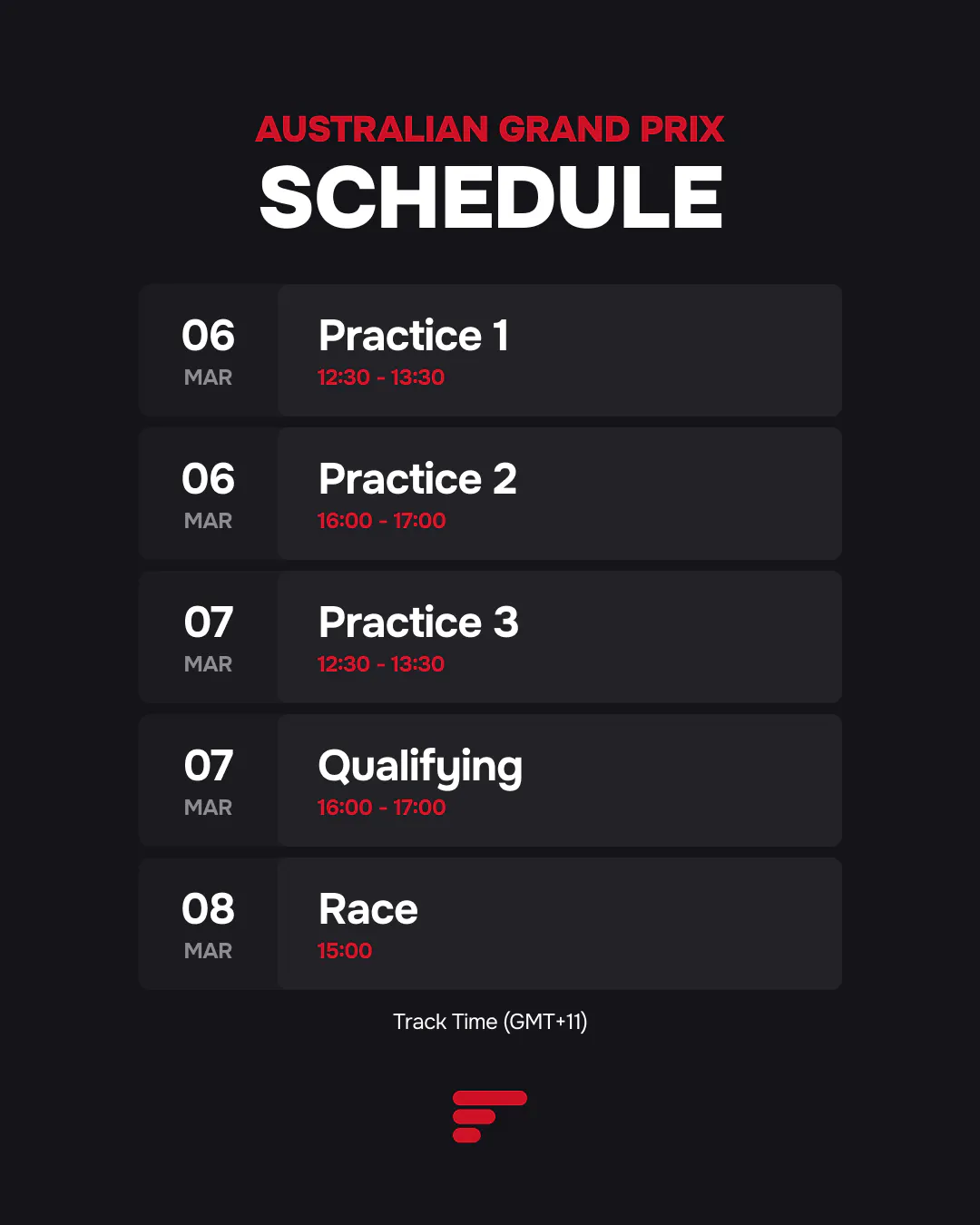
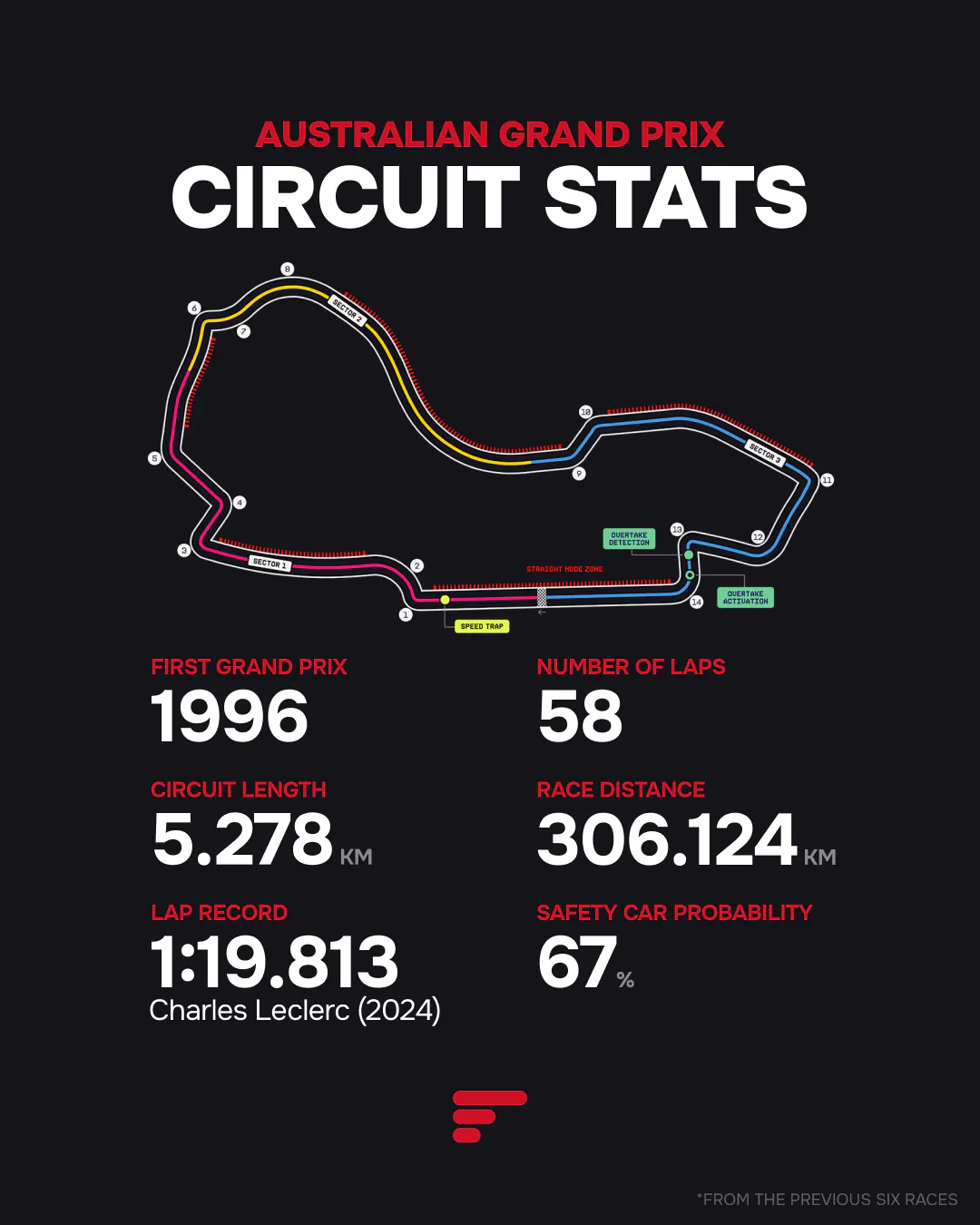
Albert Park Circuit Stats
- First Grand Prix: 1996 (first Australian Grand Prix held at Adelaide in 1985)
- Number of Laps: 58
- Corners: 14
- Circuit Length (km): 5.278
- Race Distance (km): 306.124
- Lap Record: 1:19.813 - Charles Leclerc (2024, Ferrari)
- Track Record: 1:15.096 - Lando Norris (2025, McLaren)
How Many F1 Track & Lap Records Were Broken in 2025 Season?
- Safety Car Probability: 67%*
- Virtual Safety Car Probability: 67%*
- Pit stop time loss: 19.30 seconds (including 2.5s stationary)
- Pole run to Turn 1 braking point: 271 meters
- Most pole positions: Lewis Hamilton (8)
- Most wins: Michael Schumacher (4)
- Overtakes completed in 2025: 45
*From the previous six races in Australia
Enhanced Real-Time Analysis: The New Live Timing Dashboard
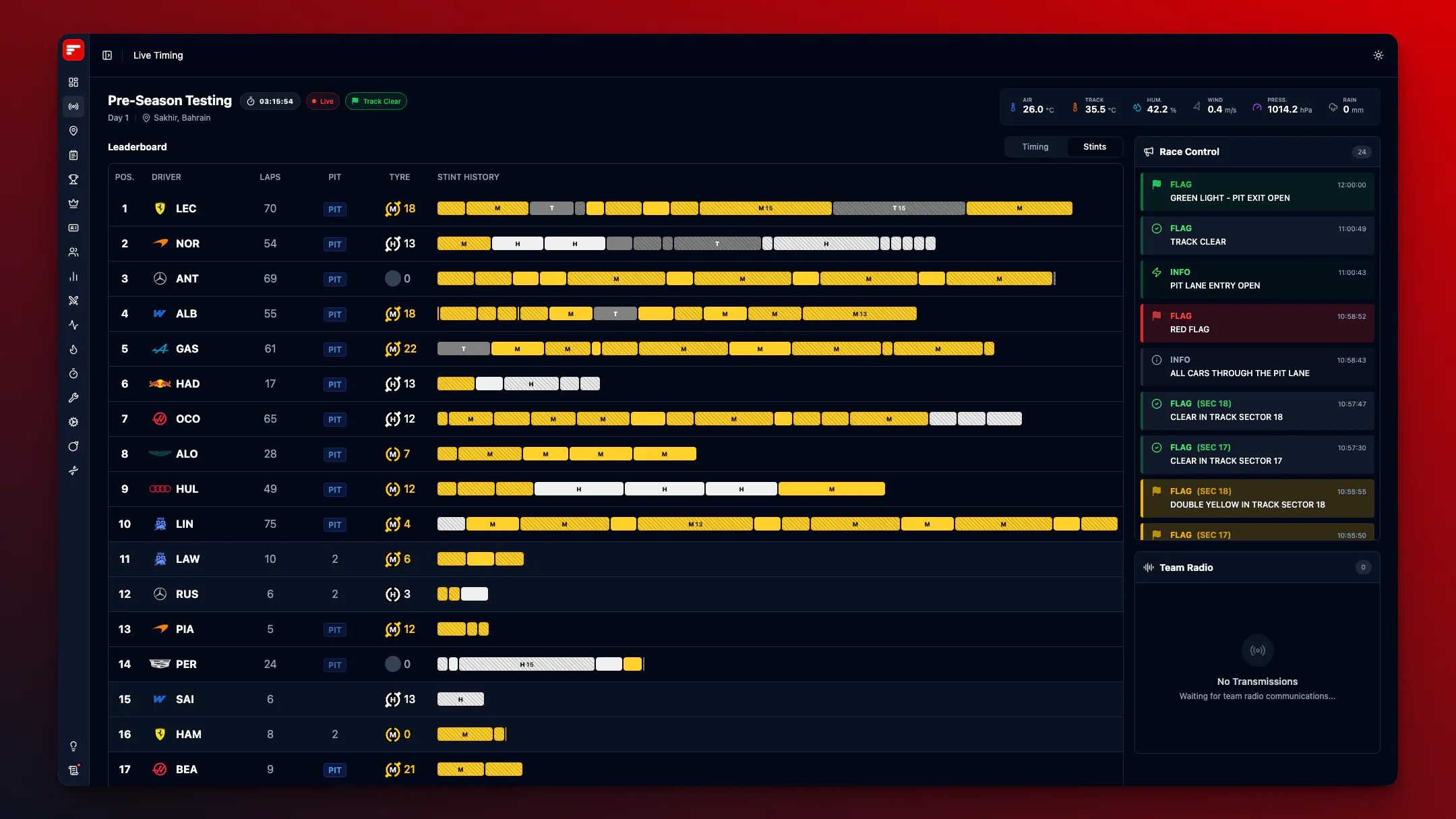
To coincide with the dawn of this new era in Formula 1, Formula 1 Dashboard is rolling out a major update to our platform. The centerpiece of our 2026 refresh is the overhauled Live Timing feature, designed to give you a professional-grade command center right at your fingertips.
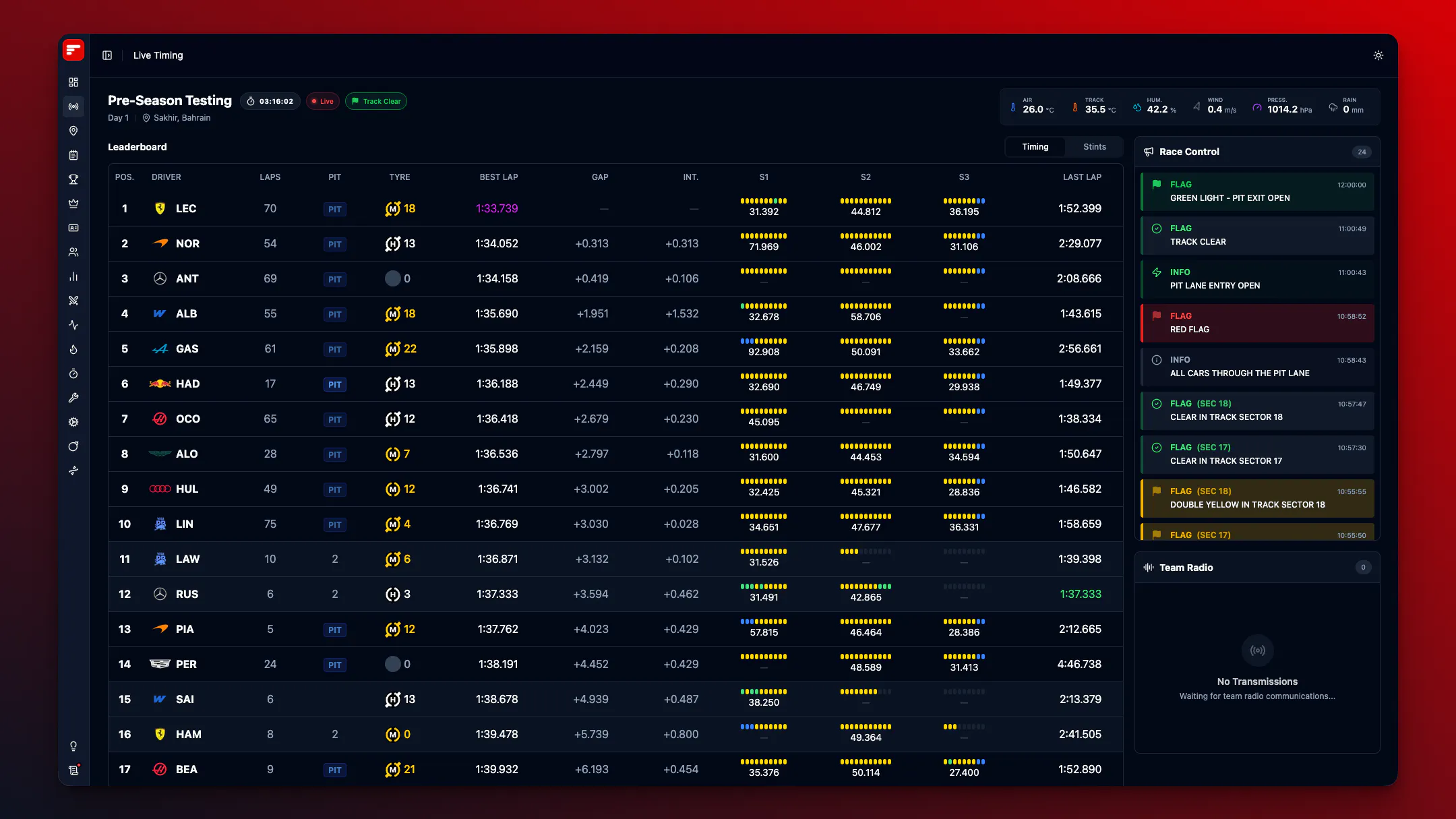
As the 22 drivers navigate the technical complexities of the Melbourne circuit, our new dashboard provides:
- Live Leaderboard: Precision timing with real-time gaps and intervals.
- Stints History: A comprehensive breakdown of tire usage and compound longevity to track strategy as it unfolds.
- Race Control Messages: Direct access to official FIA flags, penalties, and track notifications.
- Team Radio: Listen to the unfiltered communication between the pit wall and the cockpit.
- Weather Updates: Live monitoring of track temperatures and incoming rain cells that could shift the race dynamic in an instant.
Whether you are following Lando Norris’s title defense or the historic debut of Audi and Cadillac, our enhanced interface ensures you won't miss a single detail of the action.